A battery sold as 42kWh will normally have less than 42kWh usable, which leaves it under the 50kWh cap. A modular system built from several units could land on either side of that cap.

Menu
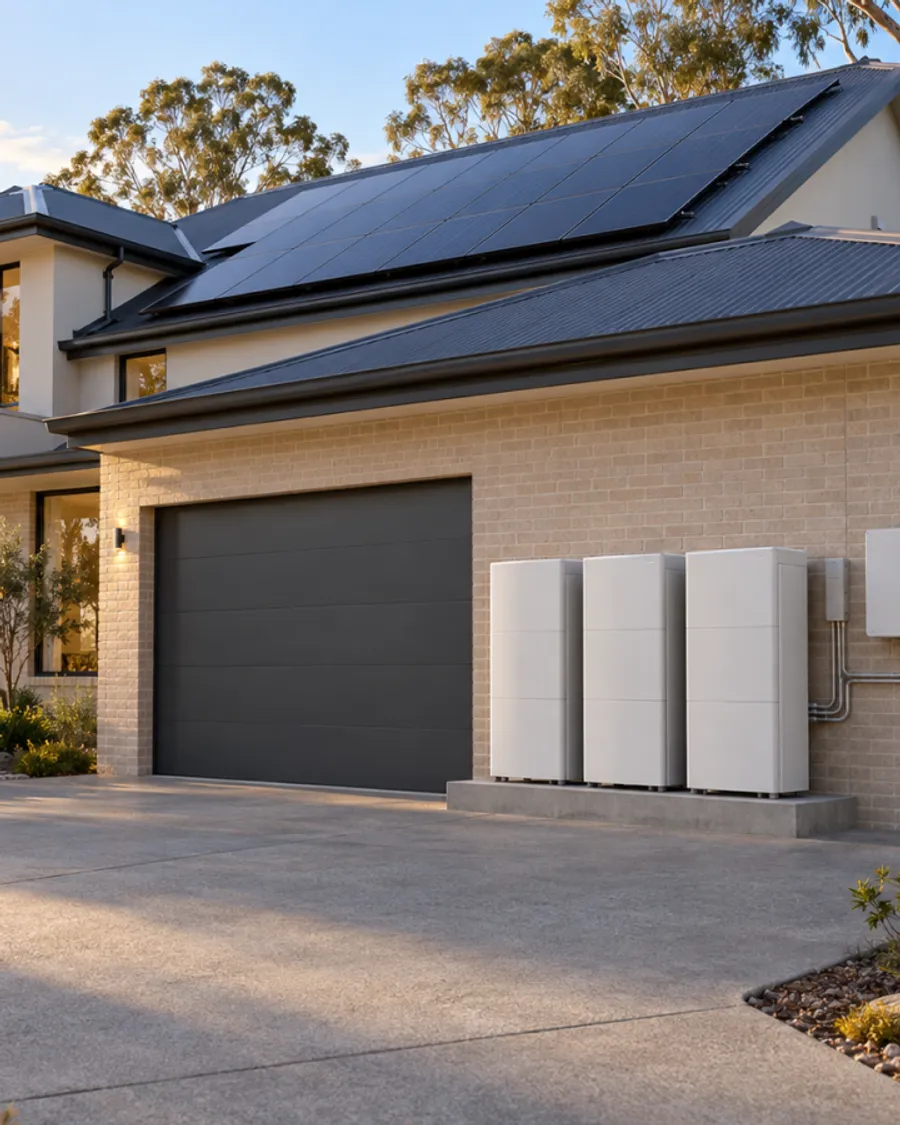
A 42kWh solar battery is close to the largest size the federal rebate will support, and it sits just under the point where the rebate stops counting capacity. That makes it a decision about trade-offs. You get more stored energy, but each extra kilowatt-hour earns a smaller discount, and the battery only pays off if the inverter, solar array and site are sized to match. Here is what to check before requesting quotes for a 42kWh solar battery system.

Batteries are usually advertised by nominal capacity, the total the cells can hold. The rebate counts usable capacity, the energy the battery can deliver, and certificates can only be claimed on the first 50kWh of it.
A battery sold as 42kWh will normally have less than 42kWh usable, which leaves it under the 50kWh cap. A modular system built from several units could land on either side of that cap.
The Clean Energy Council (CEC) approved list shows nominal and usable figures side by side, and for stackable systems the final configuration must be on that list. Ask for the model number and read the usable column yourself.
The Cheaper Home Batteries Program delivers its discount as small-scale technology certificates (STCs). Since 1 May 2026, the STC factor applies in bands of usable capacity: 100% for the first 14kWh, 60% from 14kWh to 28kWh, and 15% from 28kWh to 50kWh.
For a 42kWh residential solar battery, that works out as the full rate. That is about 53% of the battery's usable capacity. A 28kWh battery counts 22.4kWh. Going from 28kWh to 42kWh therefore adds roughly 13% more certificates for roughly 71% more capacity.
The STC factor also drops every six months through to 2030. Ask for the certificate count and its dollar value as a separate line on your quote, then compare what the extra 20kWh costs against what it adds to the discount. If you are weighing a smaller option, our 28kWh solar battery covers the top of the 60% band.
Capacity is stored energy in kWh. The inverter's rating in kW decides how fast that energy moves in and out. On a 5kW inverter, charging 42kWh at full power takes nearly 10 hours, which is longer than the strongest hours of sun on most days.
Discharge has the same limit: if the inverter caps output below what your house draws, the shortfall comes from the grid even with a full battery.
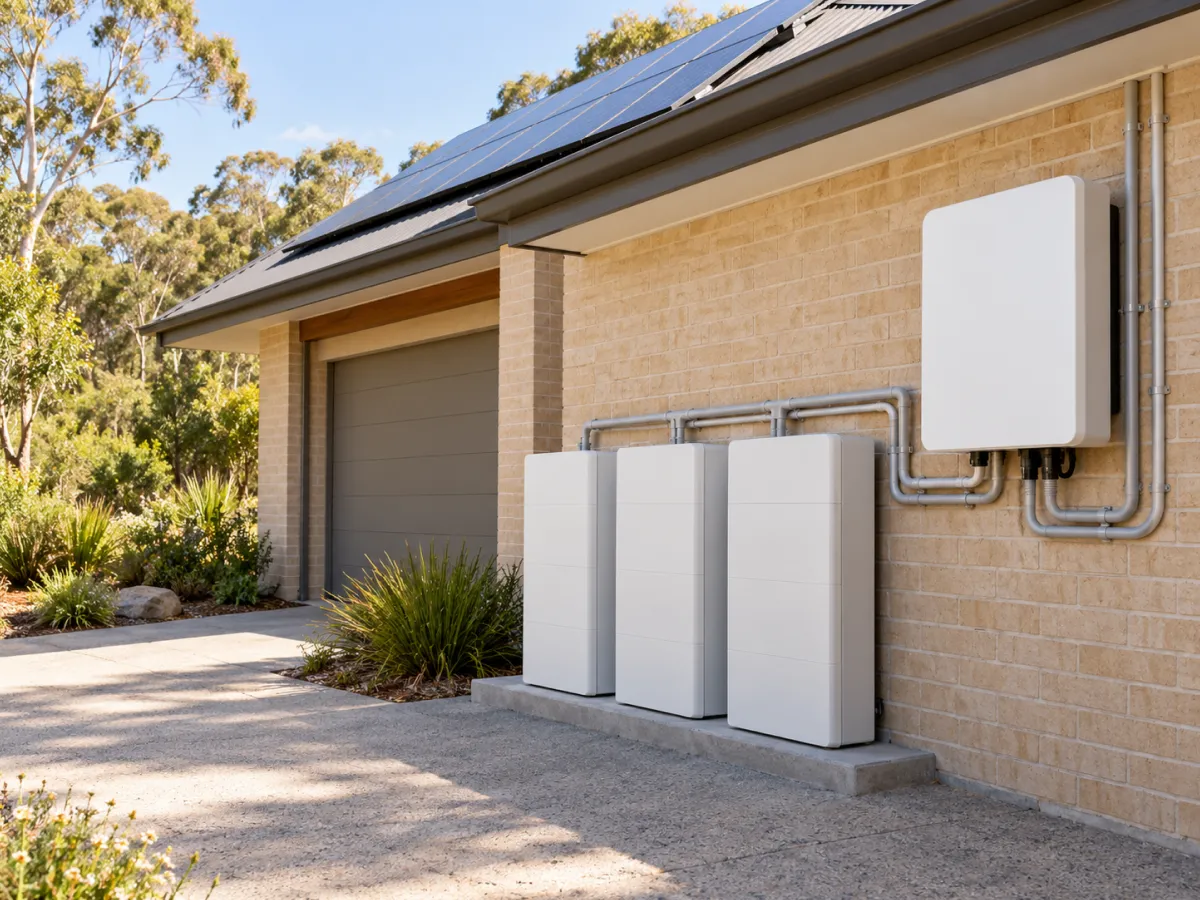

Ask for continuous and peak output ratings, how many inverters or modules the system uses, and whether your home is single-phase or three-phase. Connection rules differ between network distributors and can limit inverter size, so ask the installer to confirm network approval in writing.
A 42kWh solar battery for a large home needs 42kWh of spare energy to charge from empty. Check your solar export in winter as well as summer. Larger arrays such as the 10kW solar system or 13kW solar system leave more to store, while a smaller array on a high-use home often does not.
Then look at what you use after dark. A home averaging 2kW overnight uses about 24kWh over twelve hours, so 42kWh covers two such nights only in theory, before the battery's reserve and conversion losses.
Homes with electric heating, electric hot water or an EV charging at night have a stronger case for this size. Solar and storage planned together are covered in our hybrid solar system.
Capacity added to an existing battery is only eligible if that system has not already received a discount under the program. The addition must be at least 5kWh, and the total must stay within 100kWh nominal.
If you buy 28kWh now and plan to reach 42kWh later, the second stage may not qualify. If you expect to grow, settle the final size before installation and ask your installer how they read the rule.
home batteries are not allowed in habitable rooms such as bedrooms and living areas. Garages, external walls and purpose-built enclosures are the usual choices.
If the battery sits on a combustible wall shared with a habitable room, a non-combustible barrier is required, and clearance zones apply around doors, windows and vents.
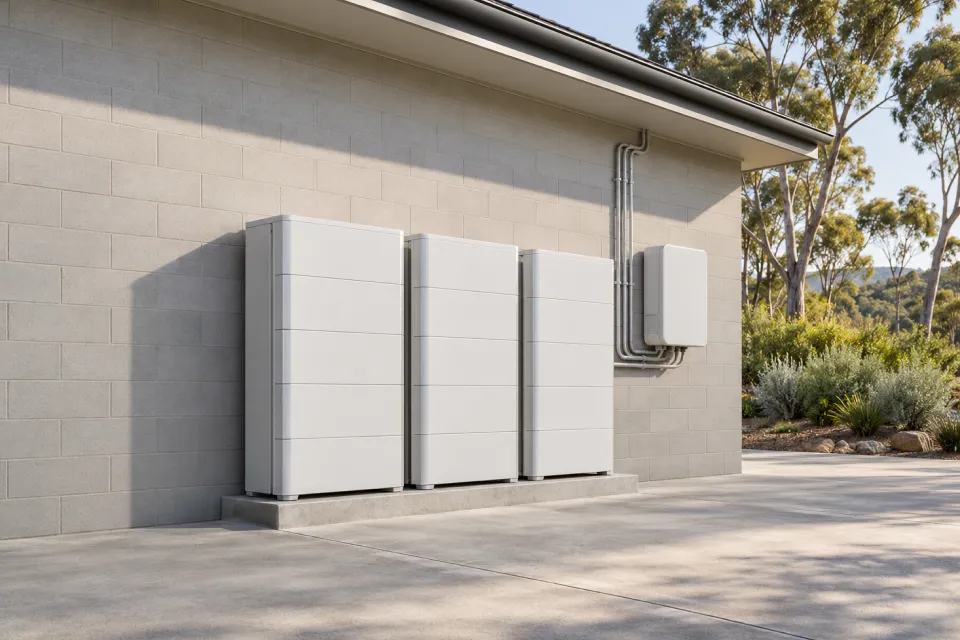
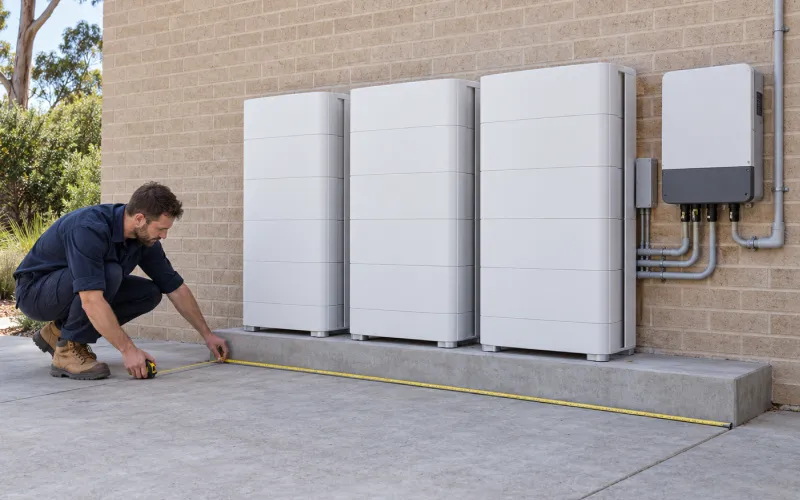
A 42kWh system may be several modules or a large cabinet, so weight, footprint and clearances all need checking on site before a quote is finalised.
For the federal rebate, the battery and inverter must be CEC listed, an on-grid system must be capable of joining a virtual power plant (joining is optional), and installation must be done or supervised by a Solar Accreditation Australia installer with a battery endorsement.
Let's Be Green is a New Energy Tech Consumer Code (NETCC) approved seller. Under the code, quotes must be itemised, specific to your site, and state expected performance and any limitations. For unsolicited sales to residential customers, contracts must show a 10-business day cooling-off right.

When comparing a 42kWh solar battery price between suppliers, confirm the quote lists: