
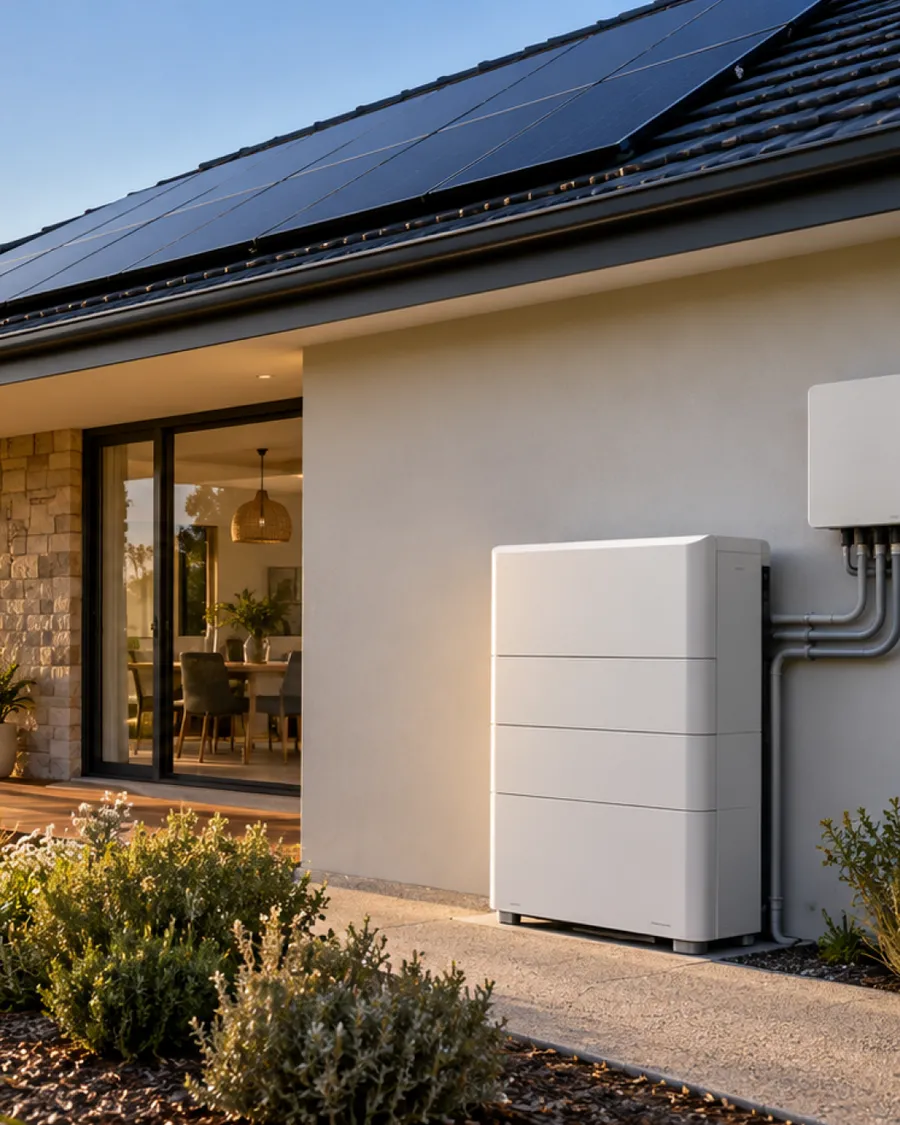
14kWh Solar Battery for Australian Homes: Sizing, Rebate and Installation Guide
A 14kWh solar battery has a particular place in the federal Cheaper Home Batteries Program: 14kWh is the top of the first rebate band, the point where full support ends and reduced support begins. This page covers what 14kWh delivers in a real household, how the rebate treats it, what installation involves and what to check on a quote.
What 14kWh means in a household?
The kWh figure measures stored energy, not power. A 14kWh residential solar battery holds 14 kilowatt-hours, enough to run a 1kW load for 14 hours or a 2kW load for seven. How fast the battery can supply that energy is a separate number, the continuous output in kW, and it depends on the battery and inverter together. Online searches use both "14kW" and "14kWh", so confirm which unit a quote is using.
-
Usable capacity is the figure that counts. Nominal capacity is the most a battery can hold at full charge. Usable capacity is the energy you can draw out. A battery marketed as a 14kWh home battery may sit slightly above or below the 14kWh line once you read the datasheet, so ask for the usable figure in writing.
-
To size it, find the average daily usage on your electricity bill, shown in kWh per day. Then estimate how much of that happens after sunset, because that is the portion a battery can cover.
-
A household that uses most of its energy in the evening gets more from a 14kWh solar battery for home use than one whose demand peaks at midday, when the panels are already producing.
-
The battery also needs surplus solar to charge. A smaller array may struggle to refill 14kWh in winter, and charging from the grid is a tariff decision, not a default. If you are still choosing panels, the 6.6kW solar system, 10kW solar system and 13kW solar system pages set out the sizes we install, and our hybrid solar system covers systems built to work with a battery.
How the federal rebate treats a 14kWh battery
The Cheaper Home Batteries Program aims for a discount of around 30% on eligible batteries. It works by creating small-scale technology certificates (STCs) based on usable capacity. Since 1 May 2026 the Clean Energy Regulator has applied the STC factor in bands: 100% for the first 14kWh, 60% for capacity above 14kWh up to 28kWh, and 15% for capacity above 28kWh up to 50kWh.
Two points matter at this size. First, capacity above 14kWh earns much less per kWh, so a 14kWh battery avoids the reduction that larger unit's face. A 16kWh battery does not receive the full rate on all 16kWh. Second, the factor falls every six months.
Who qualifies for the discount
- The battery and its inverter must appear on the Clean Energy Council's approved product lists.
- A Solar Accreditation Australia accredited installer must complete the installation.
- The battery must connect to a new or existing solar system. Standalone batteries are not eligible.
- A grid-connected battery must be capable of joining a virtual power plant (VPP). You are not required to join one.
- Nominal capacity must be between 5kWh and 100kWh, and only one battery system per premises earns certificates.
You do not apply to the government yourself. The retailer normally passes the discount on as a reduction in the price or as a rebate after installation.
Cost of a 14kWh solar battery system
-
Quotes for a 14kWh solar battery system differ with the brand, inverter compatibility, whether you are adding to existing solar, and how complex the wiring and mounting are.
-
We have not printed a figure here because the 14kWh solar battery price depends on those details and on the rebate in force on the installation date. Ask for an itemised quote that shows the price before and after the discount.
Installation and location
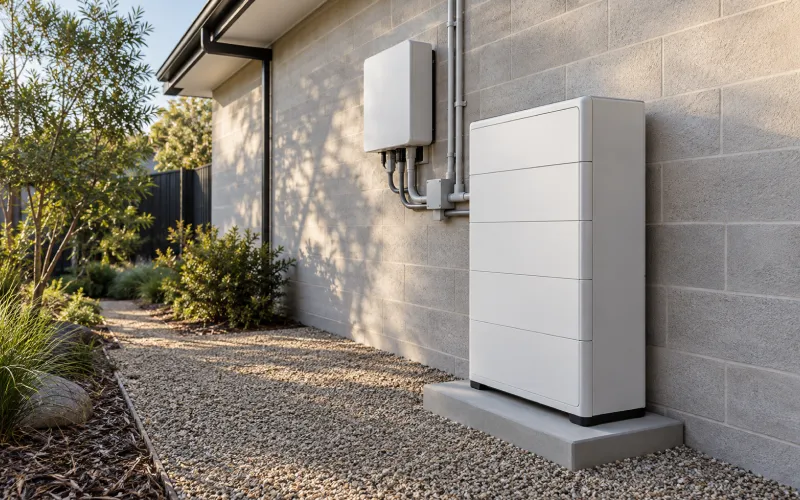
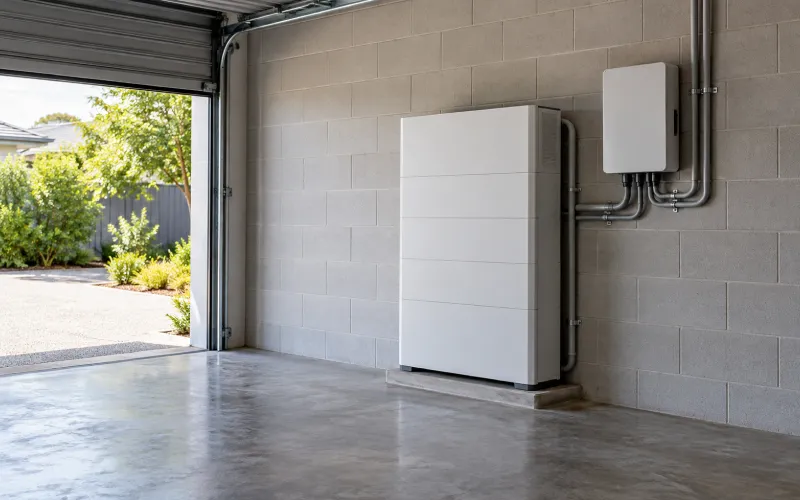
14kWh solar battery installation sits in a garage, on an external wall or in a dedicated enclosure, and not inside a habitable room such as a bedroom.
Clearances apply around windows, doors and vents that open into living spaces, and a non-combustible barrier may be needed where the wall backs onto a habitable room. Ask for the proposed location on the quote.
Blackout cover is a separate question. Not every battery supplies the home during an outage. That depends on the inverter and whether a backup circuit is installed, and some systems back up only selected circuits. If this matters to you, ask which loads are covered and for how long.
What a NETCC quote should show
Let's Be Green is a NETCC-approved seller. The New Energy Tech Consumer Code is administered by the Clean Energy Council and authorised by the ACCC, and it covers everything from marketing to after-sales support. For a 14kWh battery, you should expect:
- a written quote that states expected performance and its limitations, with no hidden costs
- no high-pressure sales tactics
- savings and rebate claims that are accurate and not exaggerated
- clear refund terms if the system cannot be connected
- complaints process you can follow
Questions to ask before you buy
- What is the usable capacity, and is this exact battery and inverter combination on the CEC approved list?
- How many STCs does the quote assume, and at what certificate price?
- Which STC factor applies on the planned installation date?
- Where will the battery be mounted, and what clearances apply?
- Will it back up the home in an outage, and which circuits?
- What do the warranty terms say, in writing?
If you want to test a 14kWh solar battery against your own bills, our guide to choosing a solar system package is a useful starting point, and you can contact the Let's Be Green team for an itemised quote.