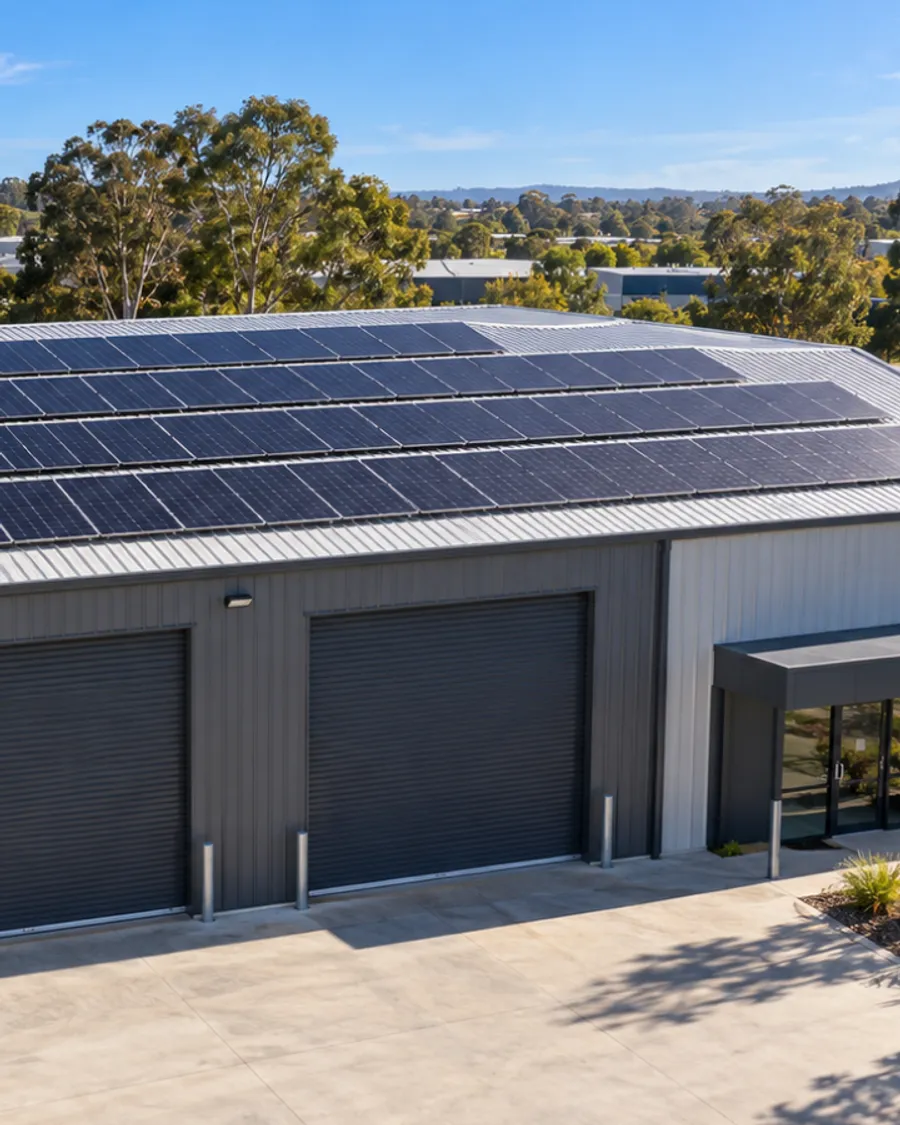
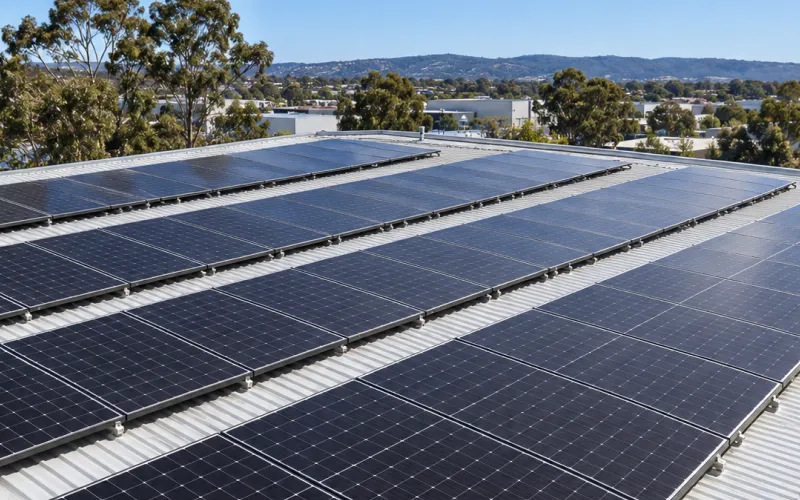
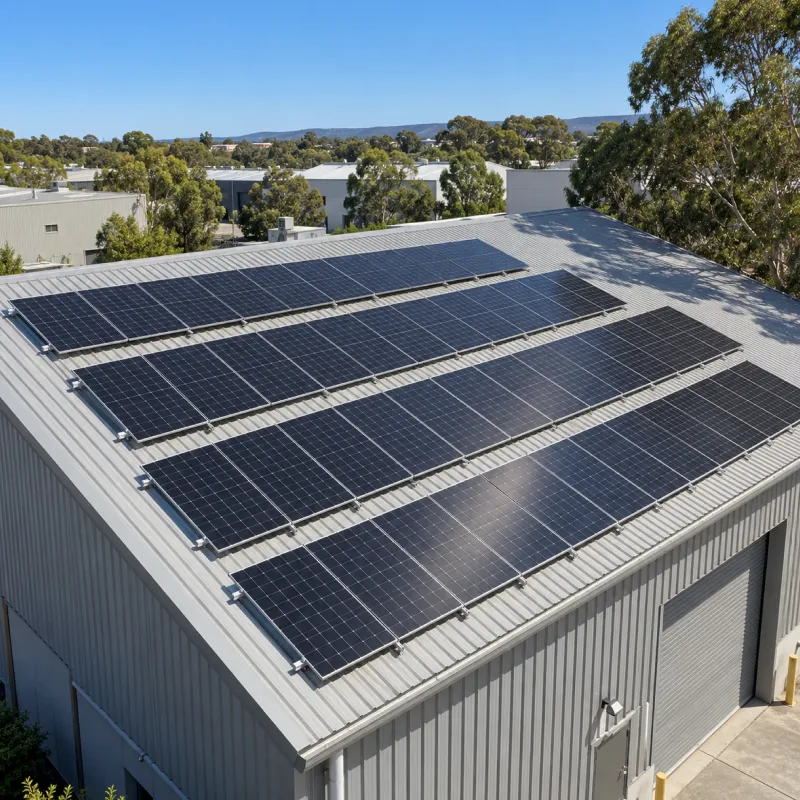
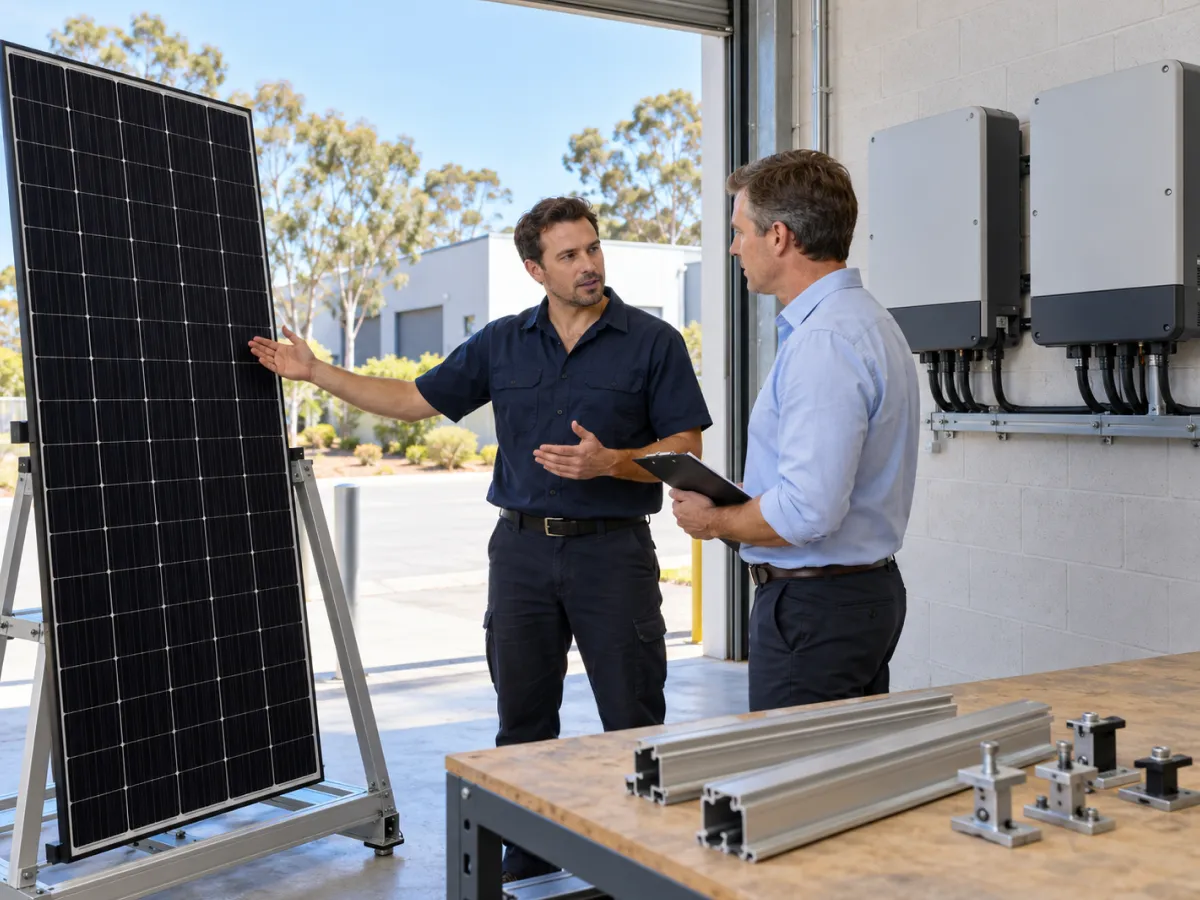
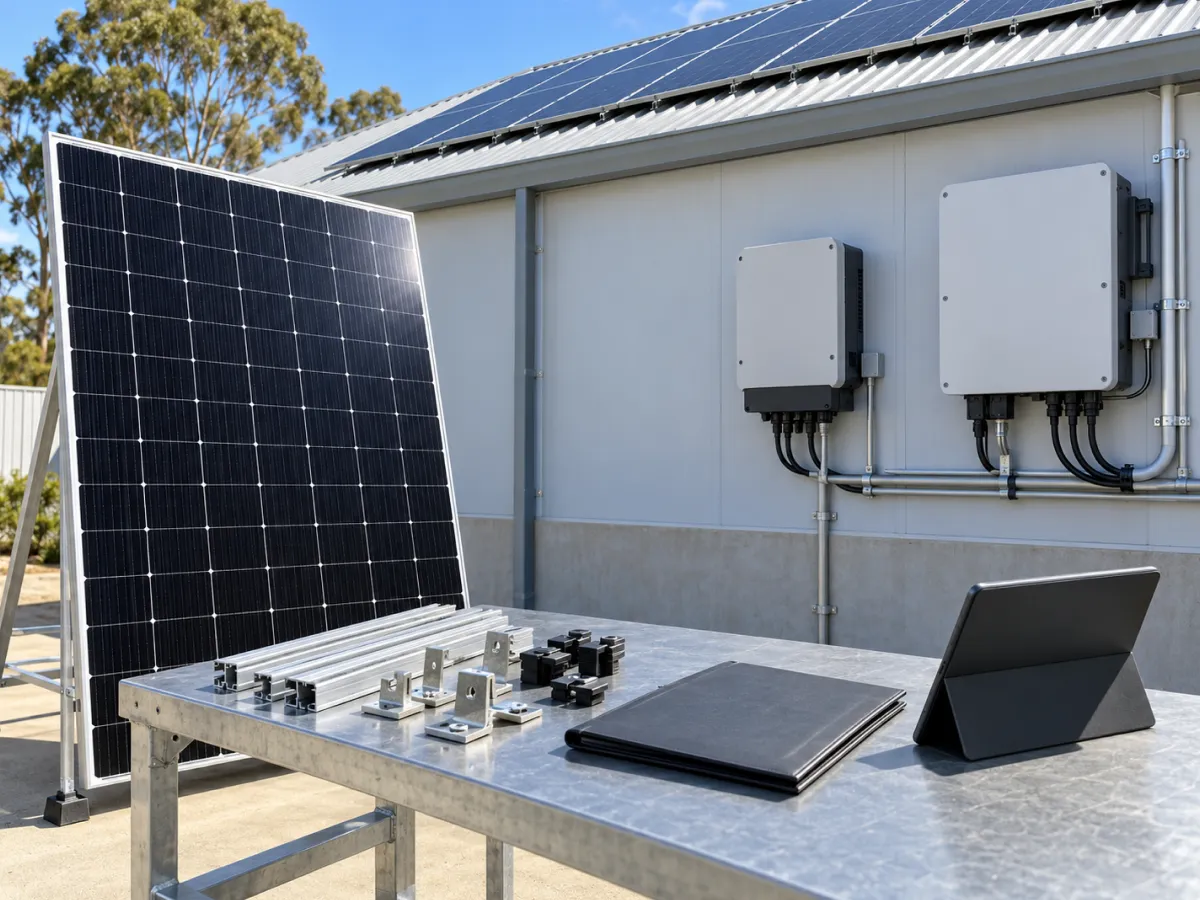
A 20kW solar system is a common size for workshops, small warehouses and retail units that use most of their power during the day. This page sets out what 20kW means in panels, output and certificates, so you can compare 20kW solar panel installation quotes on specifics instead of headline sizes.
The 20kW figure is the combined rated power of the panels. It is not the amount of electricity you will use or export. The number of panels depends on the wattage of the model chosen, so a quote should list the panel count and the model together. Higher-wattage panels mean fewer panels on the roof, which matters when roof space is tight.
Actual output depends on roof direction, tilt, shading, dirt on the panels and your location. The Clean Energy Regulator (CER) places every postcode in one of four solar zones that reflect how much sunshine an area gets, and the zone feeds into the certificate count. Ask your designer for a modelled annual generation figure for your roof and a plain explanation of how it was worked out.
How the certificate discount works at 20kW Solar
Small-scale technology certificates (STCs) lower the upfront cost of an eligible system, and one STC represents 1MWh. The number a system earns depends on its size, its postcode zone and its installation date.
For systems installed in 2026 the CER applies a 5-year deeming period, and that period falls by one year every year until 2030, so the same system installed later earns fewer certificates.
This page prints no dollar value because certificate prices move. When comparing a 20kW solar system price between suppliers, ask for the zone, the STC count and its dollar value as separate lines on each quote.
To qualify, panels and inverters must be on the Clean Energy Council (CEC) approved list, the installer must be accredited by Solar Accreditation Australia (SAA), and certificates must be created within 12 months of installation. Systems up to 100kW qualify, so 20kW sits well inside the limit.
Will your site use that much power?
Compare your premises' weekday use while the sun is up with the daily output your designer estimates. Your interval (smart meter) data shows this hour by hour. Where daytime use is lower than output, the surplus is exported, usually at a lower rate than you pay to import. Where it is higher, the system covers part of the load and you buy the rest.
A 20kW solar system larger than your daytime use is not wrong, but the exported share earns less per kWh, so ask the designer to model output against your own interval data. Check weekends too. A site that closes on Saturdays and Sundays exports more than one that trades seven days.
For many small sites, a 20kW solar panel setup works best where compressors, refrigeration or workshop machinery run through the middle of the day.
Roof, inverter and network for a 20kW solar system
1
Roof type changes the mounting. Metal sheet, tile and Klip-Lok roofs use different fixings, and an older roof may need repairs before panels go on. Ask how many roofs faces the array uses, because panels split across east and west faces produce at different times of day.
2
Ask about inverter output relative to the array, and whether your supply is single-phase or three-phase, because network limits on inverter size and export vary by distributor.
3
Your distributor approves the connection, which can take up to 30 business days in some areas. Find out who lodges the application and whether the install date depends on approval.
Equipment choices that change a quote
Panel model, inverter brand, mounting type, monitoring and warranty terms are where two 20kW solar for business quotes differ most. Ask for the product warranty and the workmanship warranty as separate items. Ask who honours each one if the installer stops trading, and whether the inverter reports to a monitoring portal you can see yourself.
Installation day and what it means for trading
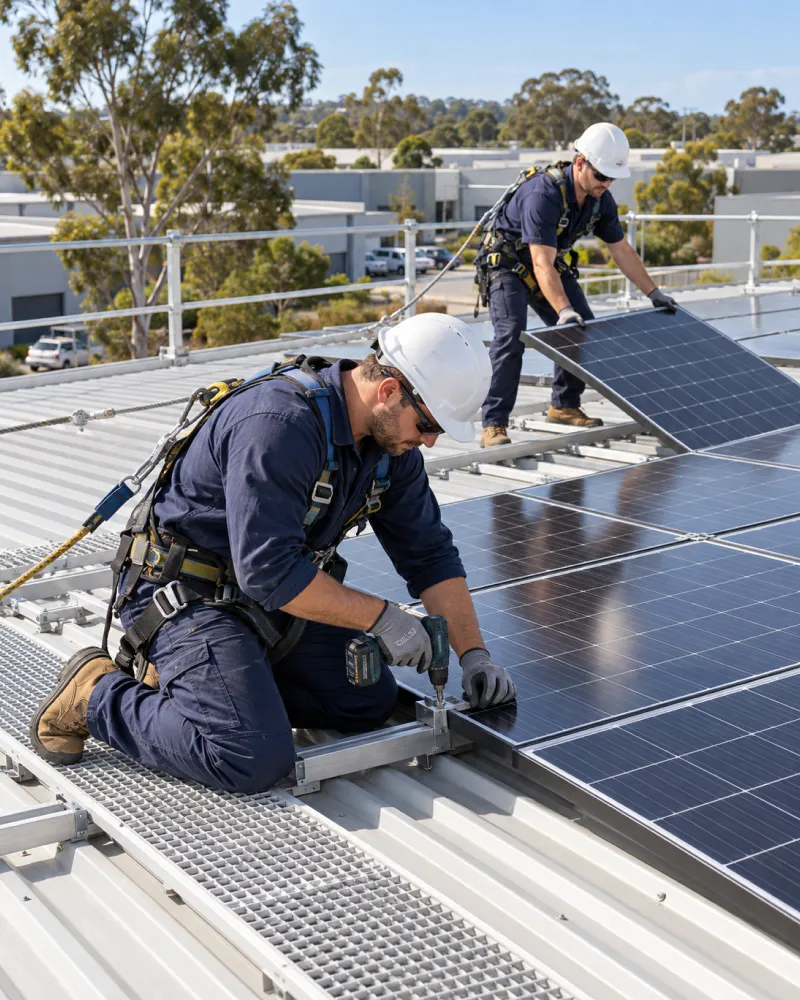
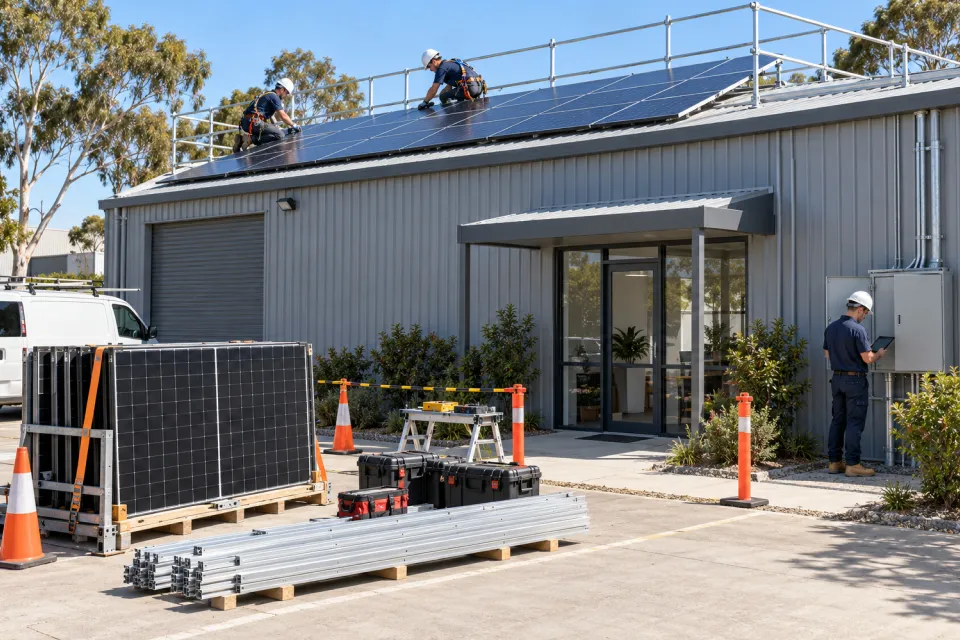
A 20kW solar system installation often needs roof access, space to store equipment and a period when power is isolated at the switchboard.
Ask how long your supply will be off, which days will affect trading and who commissions the system. Ask when the monitoring portal goes live too, so you can compare real output against the estimate from the first weeks.
Adding a battery, or stepping up in size
Storage extends use beyond sunset. The Cheaper Home Batteries Program is open to small businesses for batteries between 5kWh and 100kWh nominal capacity, and the hybrid solar system page explains how solar and storage fit together.
If your daytime load is higher than 20kW covers, the 30kW solar system and 50kW solar system show the next sizes. Certificate counts rise with system size, so ask each quote to state the count.
Quotes and the NETCC
Let's Be Green is a New Energy Tech Consumer Code (NETCC) approved seller. The code covers small-scale products and small-business customers but gives no kW cutoff, so confirm in writing that your purchase is covered. Quotes under the code must be itemised, specific to your site and clear about expected performance and limitations.
For a 20kW solar panel quote for a small business site, check that it names the panel and inverter models, the panel count, the zone used for certificates, the estimated annual generation and the warranty terms.
The kW figure is power, the size of the panel array. The kWh figure is stored energy, which describes a battery. A 20kW solar system produces power. It does not store any.
It depends on the wattage of the panel model. Higher-wattage panels mean fewer of them, so the quote should list both the count and the model.
Only while the sun is up, and only up to the inverter's output. Compare your peak daytime demand with the inverter rating, and use interval data to see how often demand exceeds it.