
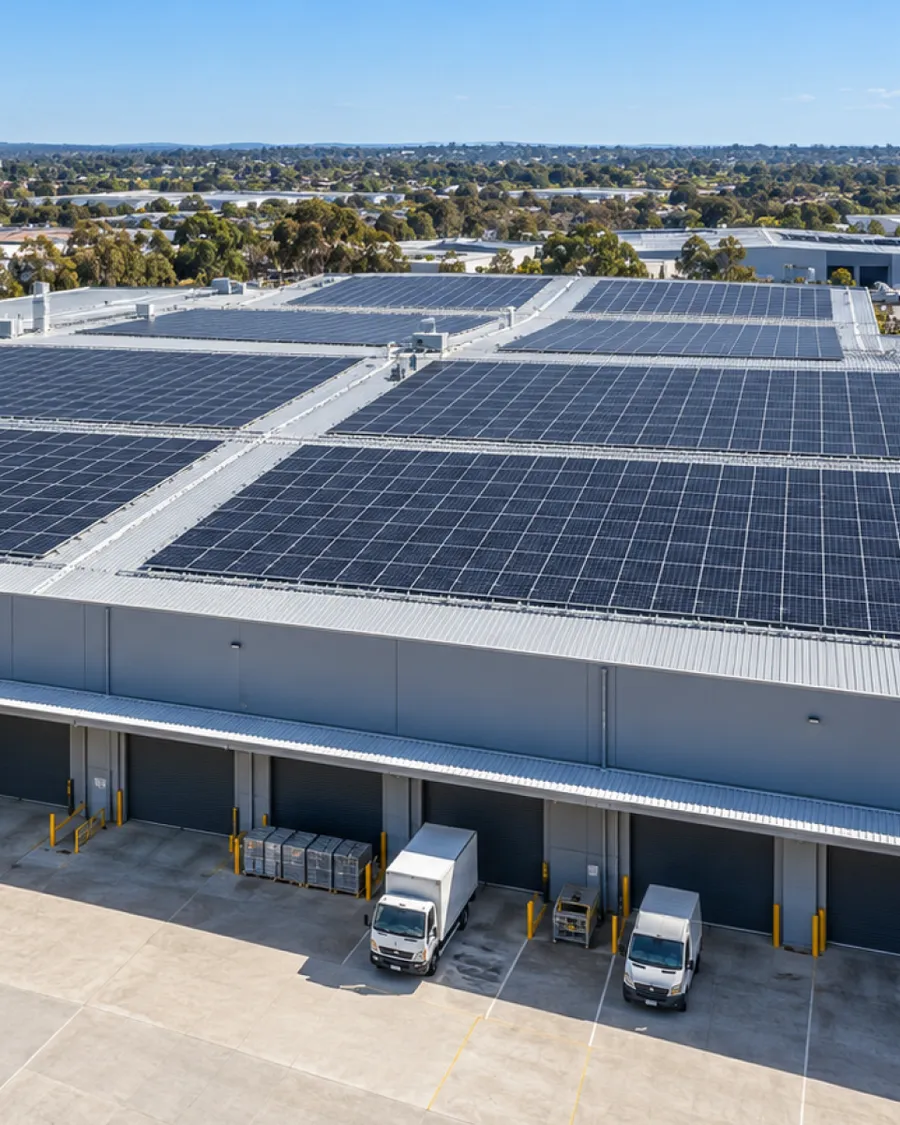
Commercial Solar System Guide for Australian Businesses
Most of the value in a commercial solar system comes from electricity your site uses itself while the sun is up, because exported power usually earns less than you pay to import it. That changes how a business should size a system, compare quotes and read the rules. This page walks through solar for business sites in the order most decisions get made.
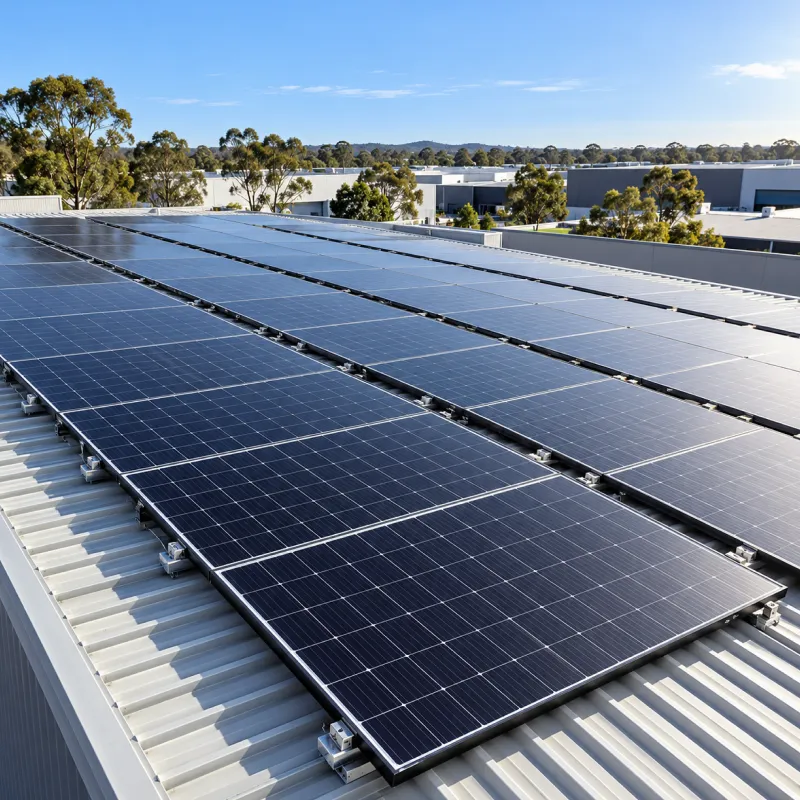
Commercial Solar system for business starts with your load, not your roof
Roof area sets the maximum size. Your daytime electricity use sets the sensible size. Gather at least 12 months of bills and ask your electricity retailer or distributor for interval (smart meter) data, which shows use hour by hour.
Compare weekdays with weekends, because a site that closes on Sunday's exports more than one that trades seven days.

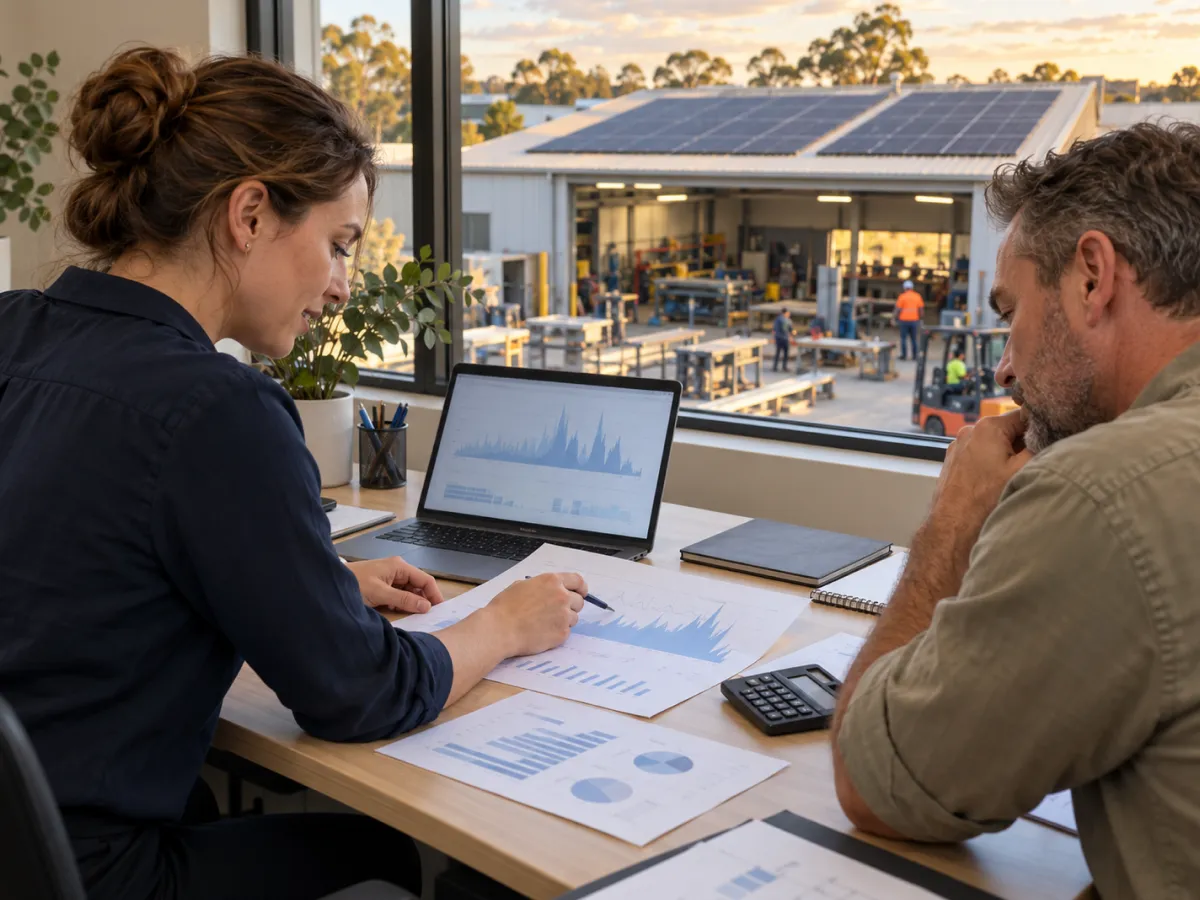
If your tariff includes a demand charge, ask the designer whether solar is likely to lower it. Peak demand can happen late in the day when panel output is falling. A good design is modelled on your actual interval data, not on a rule of thumb per square metre of roof.
Which size band your project falls in
The size of the system decides how the federal certificate scheme treats it.
-
Up to 100kW: a system of no more than 100kW, with annual output under 250MWh, can create small-scale technology certificates (STCs). Panels and inverters must be on the Clean Energy Council (CEC) approved list, installation must be by a Solar Accreditation Australia (SAA) accredited installer, and certificates must be created within 12 months of installation. The deeming period is 5 years in 2026 and falls by one year each year until it reaches 1 year in 2030.
-
100kW to 1MW: for systems installed from 1 October 2026, the Clean Energy Regulator is extending STC eligibility to this range, using a fixed 5-year deeming period. Applications are not expected to open until mid to late November 2026, and the government is still finalising design, installation and compliance requirements for these systems.
If your roof could take more than 100kW, ask your installer in writing how certificates will be handled, since the rules were still settling at the time this page was written. Our 20kW, 30kW and 50kW solar system pages all sit inside the 100kW band.
Network approval and export limits
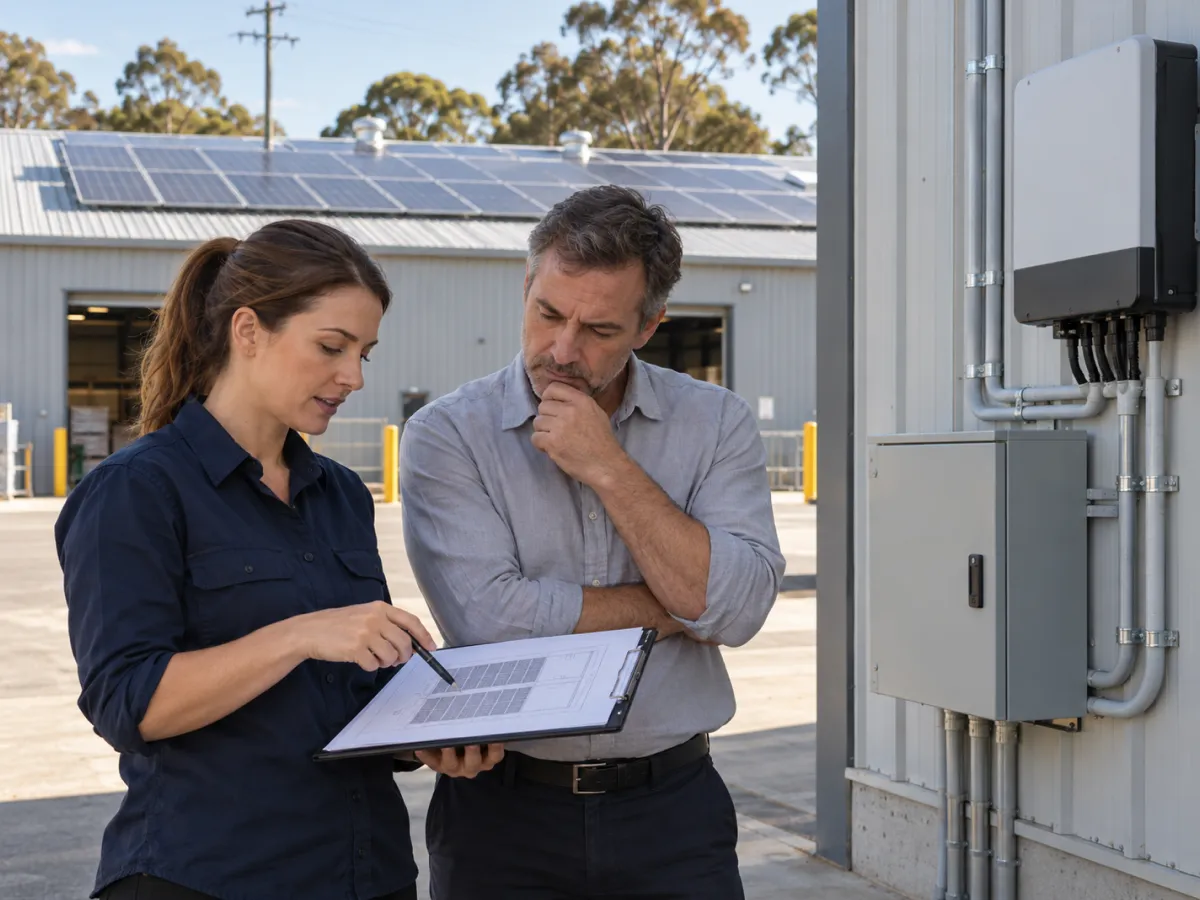
Your local distributor approves the connection, and your installer normally lodges the application. The connection agreement can limit inverter size or the amount you can export to the grid.
Ask three things before you sign: who lodges the application, what export limit is likely to apply, and what that limit does to expected generation. A system designed to export very little may need a smaller array or controls, and that should be in the quote.
Roof, structure and site checks
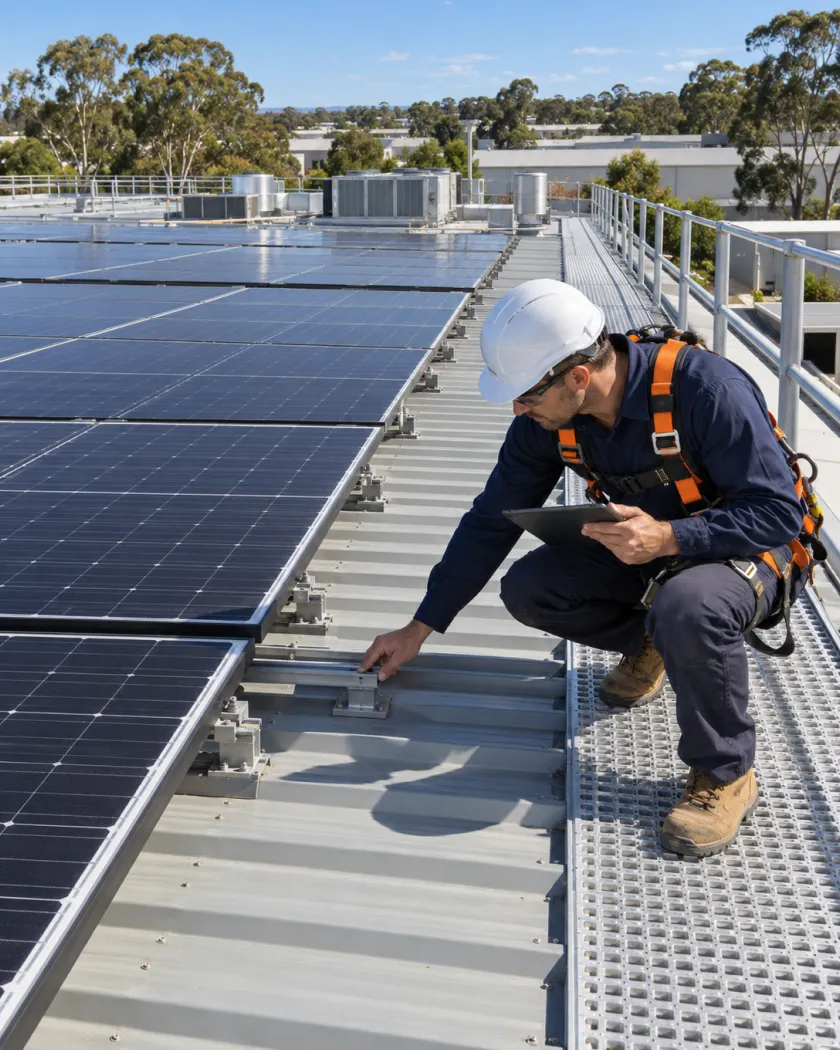
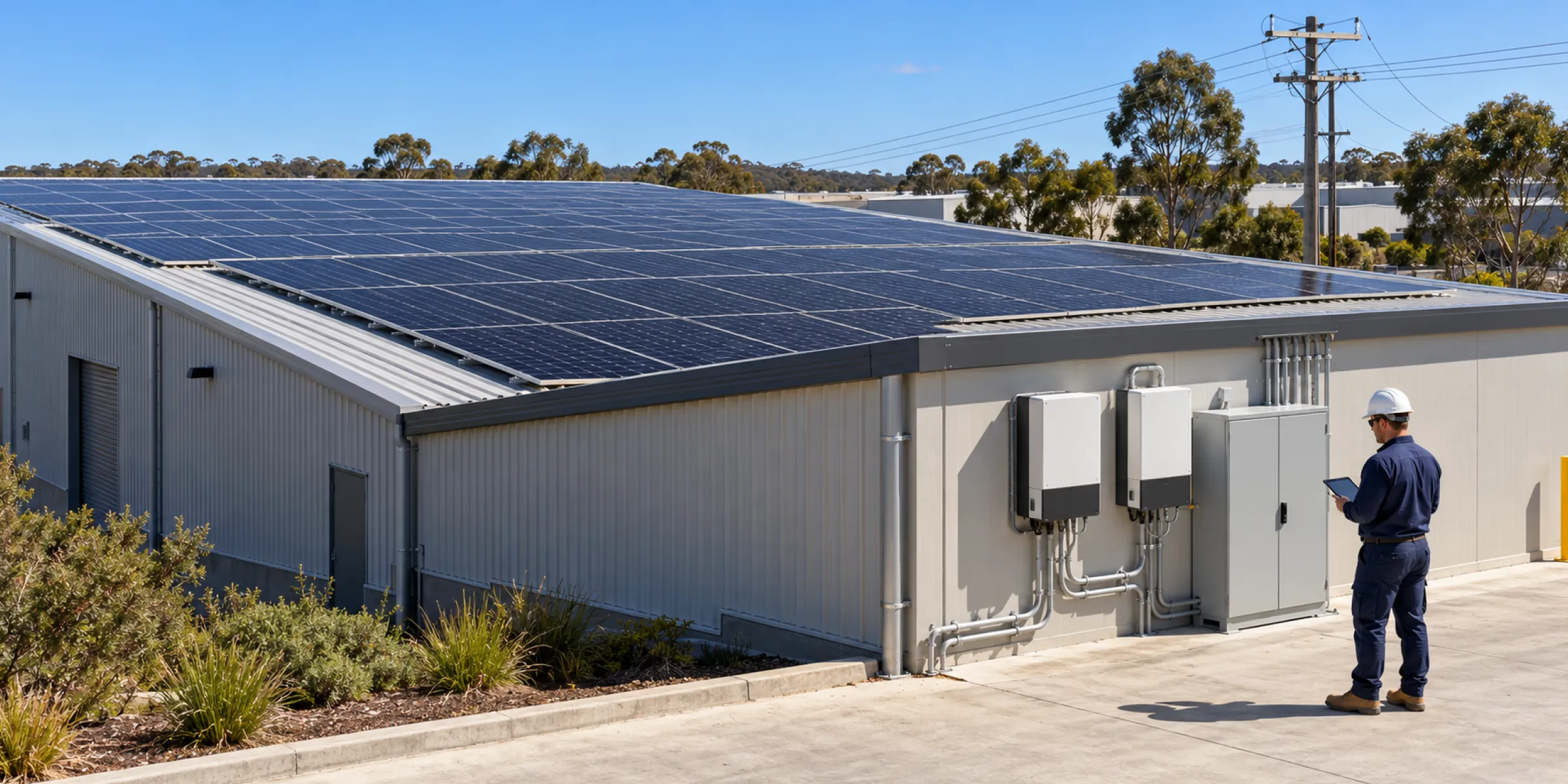
Solar panels for a commercial site must suit the building as well as the load. Before quoting, an inspection should cover
- roof age and material,
- whether the structure can carry the extra weight,
- shading from neighbouring buildings or plant,
- access for cleaning and servicing,
- switchboard capacity
- and whether supply is single-phase or three-phase.
If you lease the premises, get the landlord's consent early, because it can hold up a project for weeks. Installations must meet Australian standards and local, state and territory electrical safety rules.
The installer should be able to name the standards the design follows. Monitoring matters after handover too: a portal that shows generation against your site's use lets you spot a failed string or inverter fault early.
Adding a battery for a business
The Cheaper Home Batteries Program is open to households, small businesses and community groups. A battery must be between 5kWh and 100kWh nominal capacity, with STCs claimed on the first 50kWh of usable capacity.
It must be on the CEC approved list, an on-grid battery must be capable of joining a virtual power plant (joining is optional), and installation must be done or supervised by an SAA accredited installer with a battery endorsement.
Batteries make most sense where your load runs after sunset or where you want some backup. If you are considering both, our hybrid solar system page explains how solar and storage fit together.
From first enquiry to switch-on
Most commercial projects follow the same sequence, and knowing it lets you plan around your trading calendar.
-
You supply 12 months of bills and interval data, and the designer inspects the roof, switchboard and supply.
-
You receive a written quote. Let's Be Green is a New Energy Tech Consumer Code (NETCC) approved seller. The code covers small-scale products and small-business customers and sets no kW cutoff, so ask in writing whether your project is covered. Quotes under the code are itemised, specific to your site and clear about expected performance and limitations.
-
Compare each commercial solar system price line by line, including the STC count and its dollar value.
-
The network application goes in once the design is agreed, so allow for the approval time described above.
-
Installation is done by an SAA accredited installer using CEC listed panels and inverters. Ask which days will affect trading and where equipment will be stored on site.
-
STCs must be created within 12 months of installation, and your monitoring portal should show output from commissioning day.