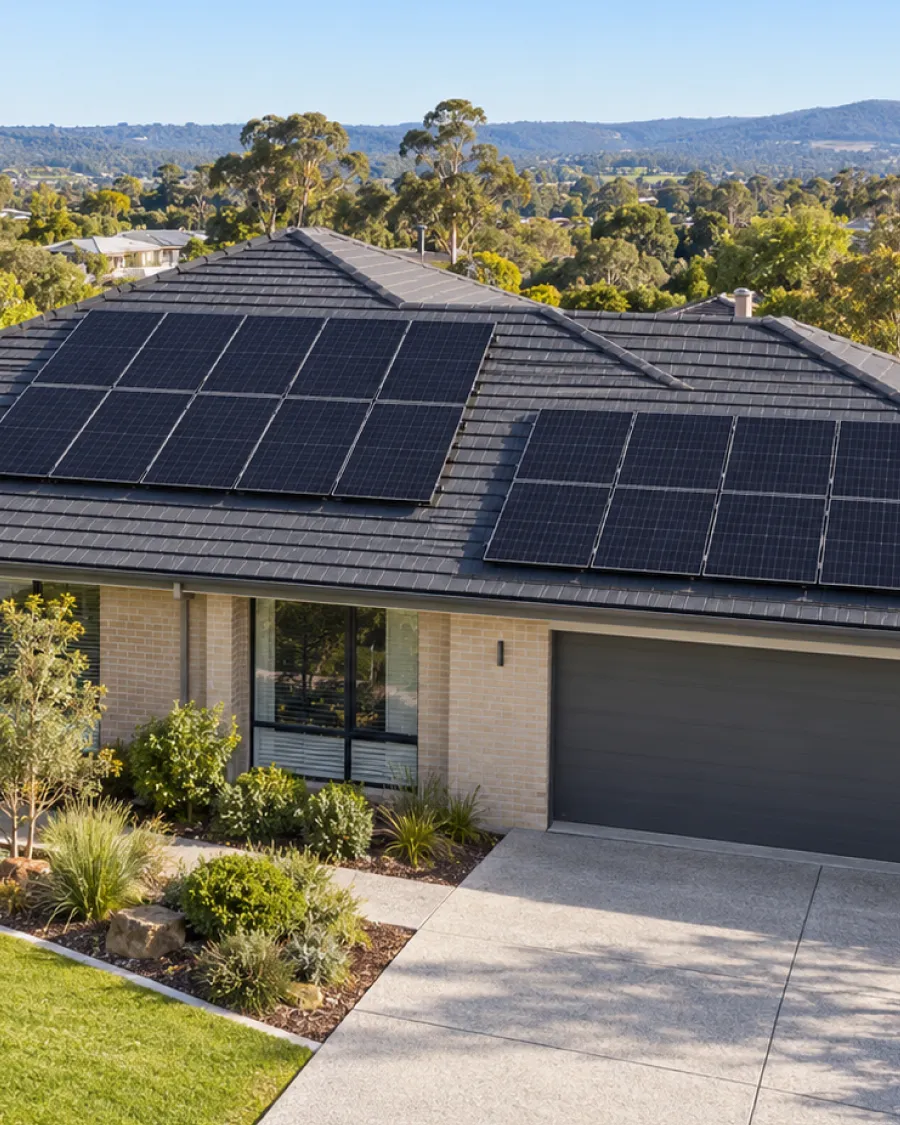
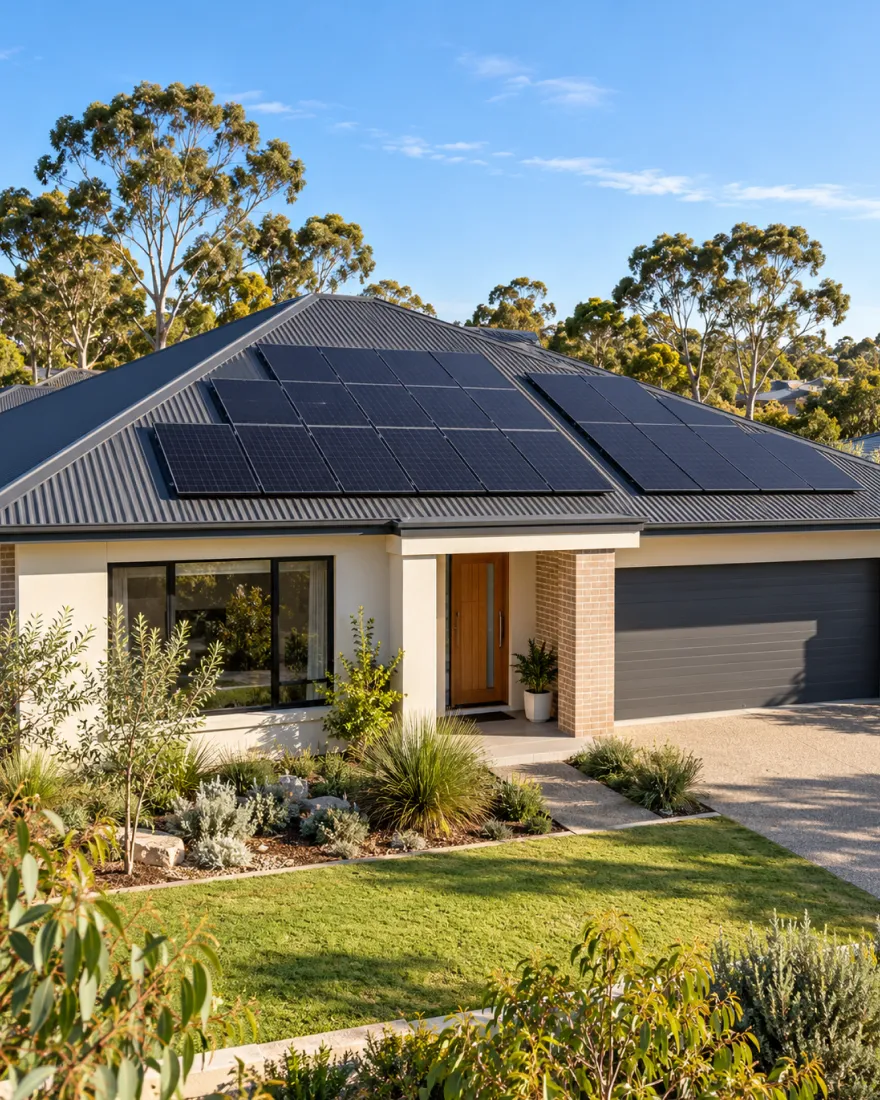
Single-storey brick home with two solar arrays on its tiled roof and a double garage

10kW Solar System: Size, Roof Space and Quote Checks for Australian Homes

A 10kW solar system is a large home array, and it raises questions a smaller system doesn't: whether your roof can hold it, whether your supply and network allow it, and whether you'll use enough of the output at home.

This page works through those questions using Australian Government figures. If you're still weighing sizes, compare it with a 6.6kW solar system or our wider residential solar range.

How many panels are in a 10kW solar system?

The 10kW rating is the combined output of the panels. Divide it by the wattage of one panel. Most new 10kW systems in Australia use 21 to 23 panels:

  • 21 panels of 475W make 9.98kW

  • 22 panels of 475W make 10.45kW

  • 23 panels of 440W make 10.12kW

  • 25 panels of 400W make exactly 10kW

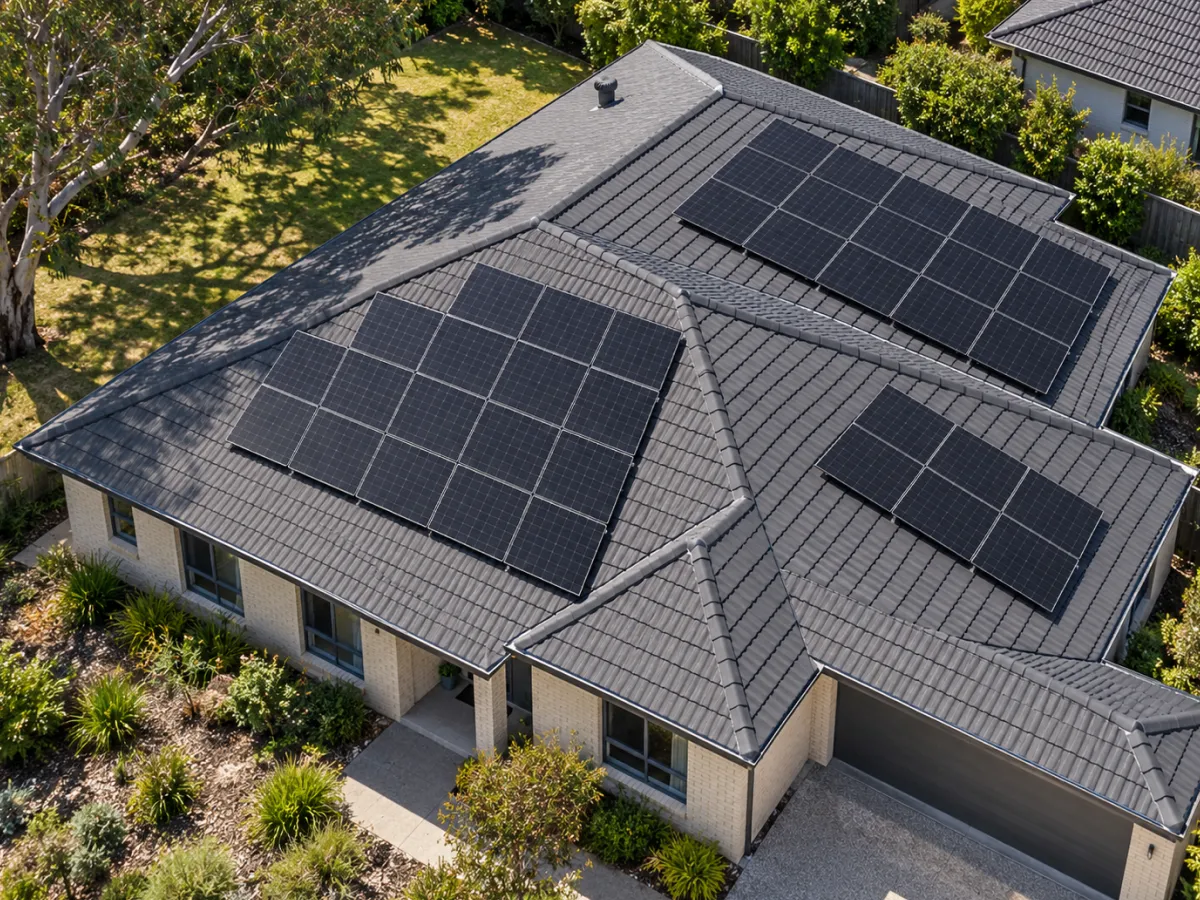
Aerial view of a home roof with solar panels spread across three sections

Higher-wattage panels are usually physically larger. A typical 475W panel is close to 2m², compared with the 1.7m² energy.gov.au gives for a standard household panel. That puts 21 panels at roughly 41 to 43m² of unshaded roof

A single 10kW inverter needs three-phase power. On single-phase, your installer may use two 5kW inverters instead. Ask for a site-specific layout showing where each panel sits, because shade from trees and buildings reduces output.
10kW solar system output

Daily figures for a 6.6kW system are about 26kWh on a sunny day in Sydney, 28kWh in Brisbane and 23kWh in Hobart. There is no published figure for a 10kW system.

Scaling those numbers up in proportion, our own calculation, gives roughly 39kWh, 42kWh and 35kWh. Treat that as a ceiling for good days, because tilt, direction and shading change real output.

Output is also lower in winter than in summer. Ask your installer for a site-specific performance estimate and the source behind it.

For context, Australian homes use roughly 11 to 23kWh a day. A 10kW solar system can produce well above that on a sunny day, so the useful question is how much you use as it is generated.

Single-phase or three-phase supply

Network limits commonly allow up to 10kW per phase on a single-phase connection and up to 30kW on three-phase. A 10kW solar system is at the top of the single-phase range, so confirm what your electricity distributor permits before you design around it.

Exports can be capped separately. energy.gov.au gives the example of a 10kW single-phase inverter allowed to connect with exports limited to 5kW, and the excess is curtailed. Ask whether your network applies a fixed or a dynamic limit.

The inverter is sized separately from the panels. If the total panel rating is higher than the inverter manufacturer's specification, the system can't access the Small-scale Renewable Energy Scheme rebate, so have the inverter specification written into your quote.

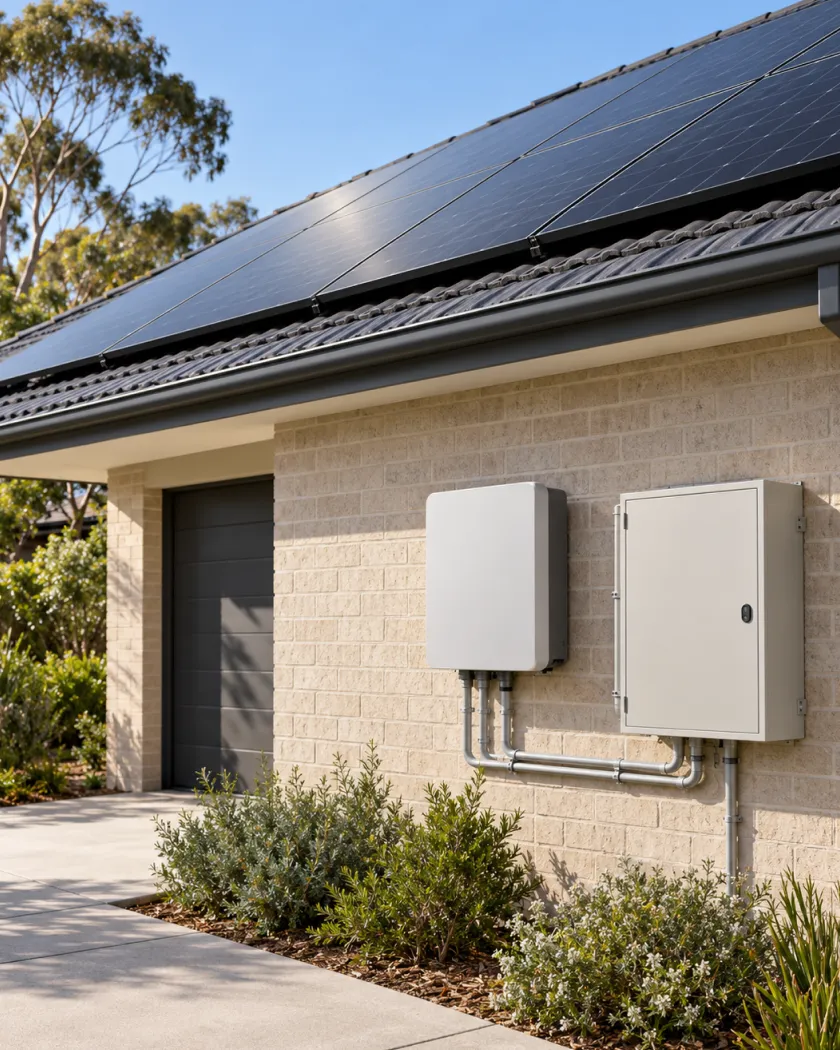
Inverter and switchboard on the brick wall of a home with rooftop solar
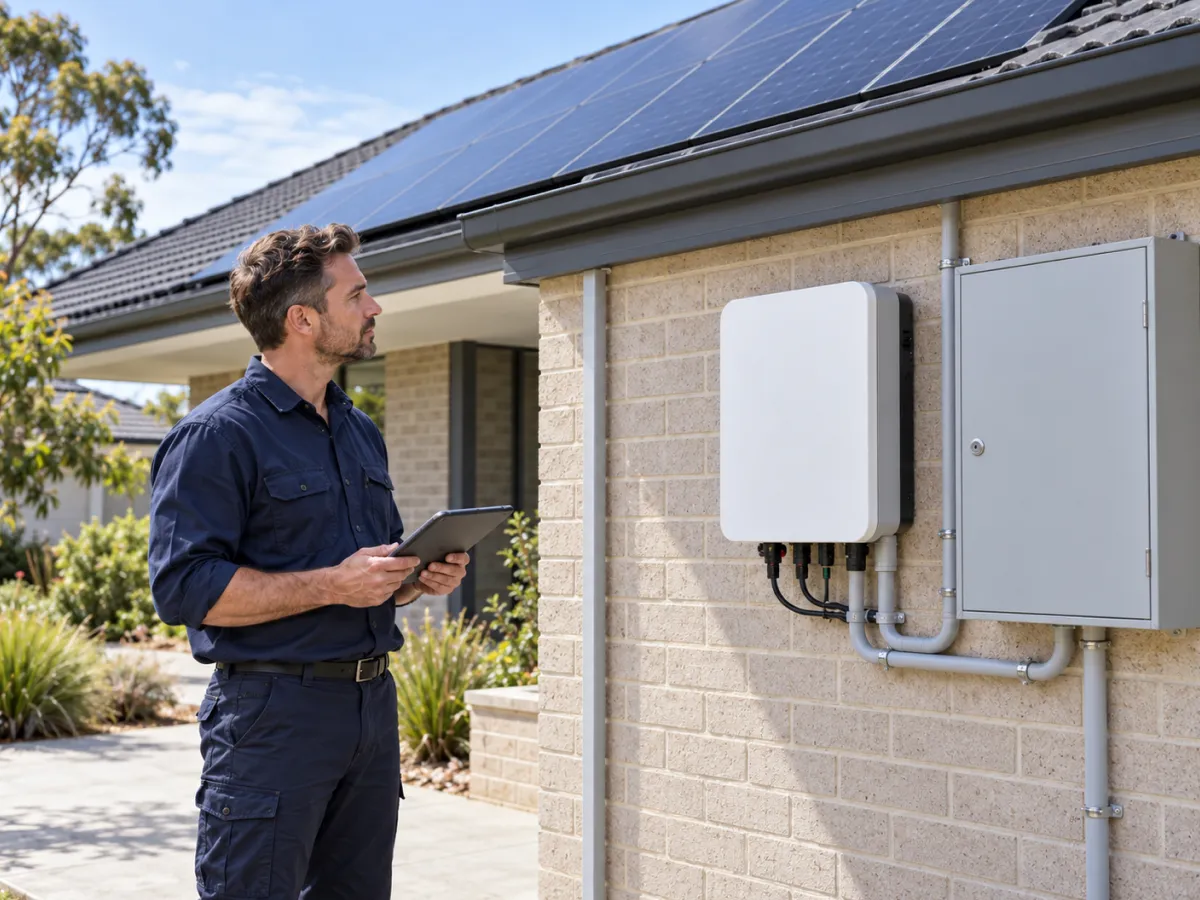
Electrician with a tablet checking the inverter and switchboard on a home's wall

Is a 10kW solar system too big?

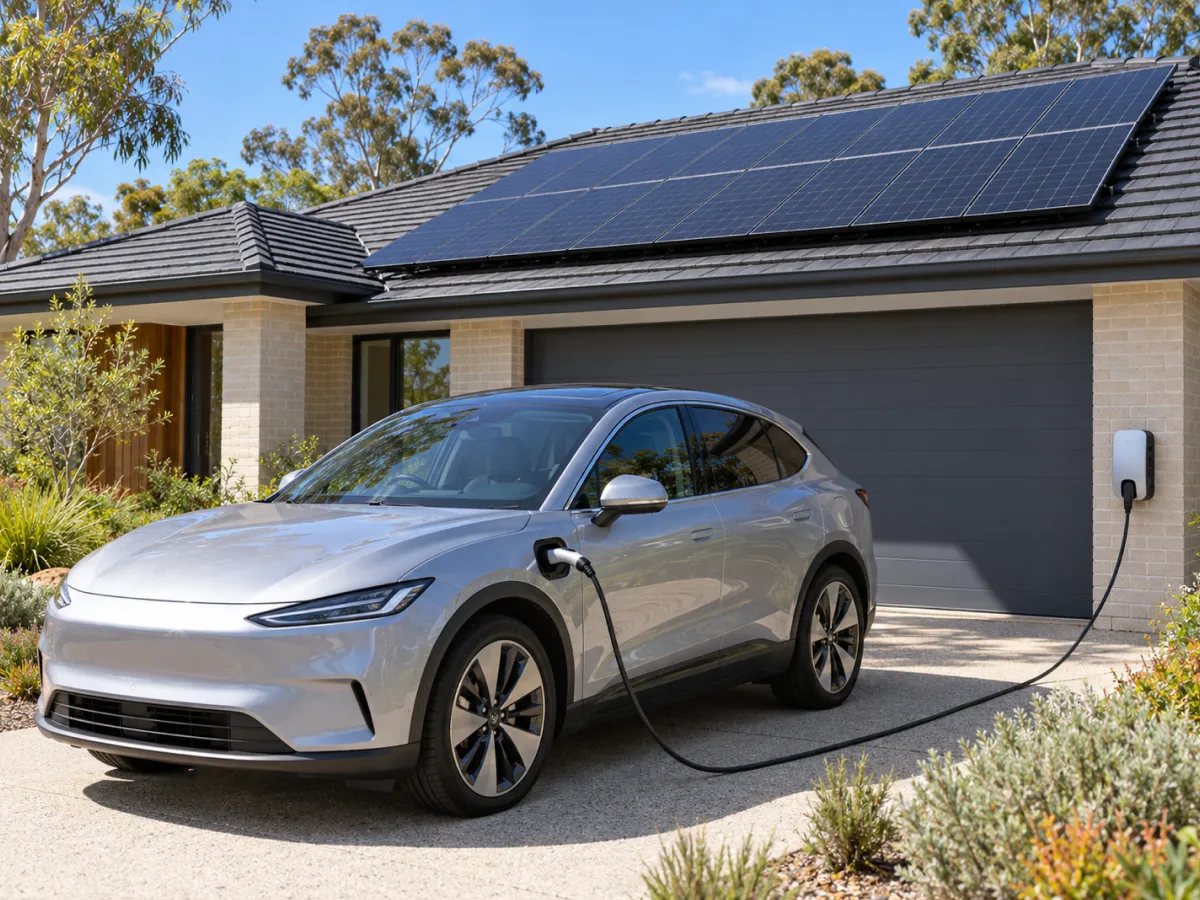
Electric car charging on the driveway of a home with a large rooftop solar array

Not if your daytime use is high. It tends to suit these households:

  • Someone is home on weekdays.
  • Air conditioning, a pool pump or an electric hot water system runs in daylight.
  • You charge an EV at home during the day.
  • You plan to add a battery.

Compare the daily average on your bill with the sunny-day figures above, then think about when you are home. If the house is empty from morning to evening and evening use dominates, much of the generation is exported, and a smaller system may serve you as well.

If you are considering going larger, our 13kW solar system covers that size, and the same inverter and export limits still apply.

10kW solar system with battery

A hybrid inverter combines the solar inverter and the battery inverter in one unit, so ask which type your quote includes even if a battery is only a future plan. Our hybrid solar system explains the setup.

The Cheaper Home Batteries Program changed from 1 May 2026. The Minister described the discount as around 30%, with the first 50kWh of capacity eligible, batteries up to 100kWh remaining eligible, and support per kWh moderating for medium and larger batteries.

Battery size depends on your evening use, not on the size of the array. Check current rules on the DCCEEW website before buying.

STCs and what affects 10kW solar system price?

  1. Most home systems qualify for small-scale technology certificates (STCs), valued by system size (up to 100kW) and climate zone. Your installer normally applies for them and shows the value as a discount, and you sign over the certificates in exchange.

  2. The deeming period is 5 years for systems installed in 2026, when the scheme ends, so the same system earns fewer certificates each year. We haven't listed dollar figures, because prices vary by installer and location.

What a Code-compliant quote includes

Let's Be Green is an approved seller under the New Energy Tech Consumer Code (NETCC), For any seller, its quote requirements include:

  1. An itemised list of equipment with manufacturer, model and quantities.
  2. A performance estimate that is reasonably based on reputable sources.
  3. The total price, with discounts and rebates shown, valid for at least 10 business days.
  4. Warranty details, noting they sit alongside Australian Consumer Law guarantees.
  5. A site-specific design where the install is custom.
  6. Any return-on-investment figure with its assumptions, stated as an estimate only.
  7. Cooling-off rights for unsolicited sales, which are 10 business days.

Start saving with solar now

Call Get a free quote