The most reliable way to test the fit is your own interval data. It shows when your business draws power through the day. If usage climbs through the morning and stays high into the afternoon, a 50kW array will mostly be used on site.

Menu
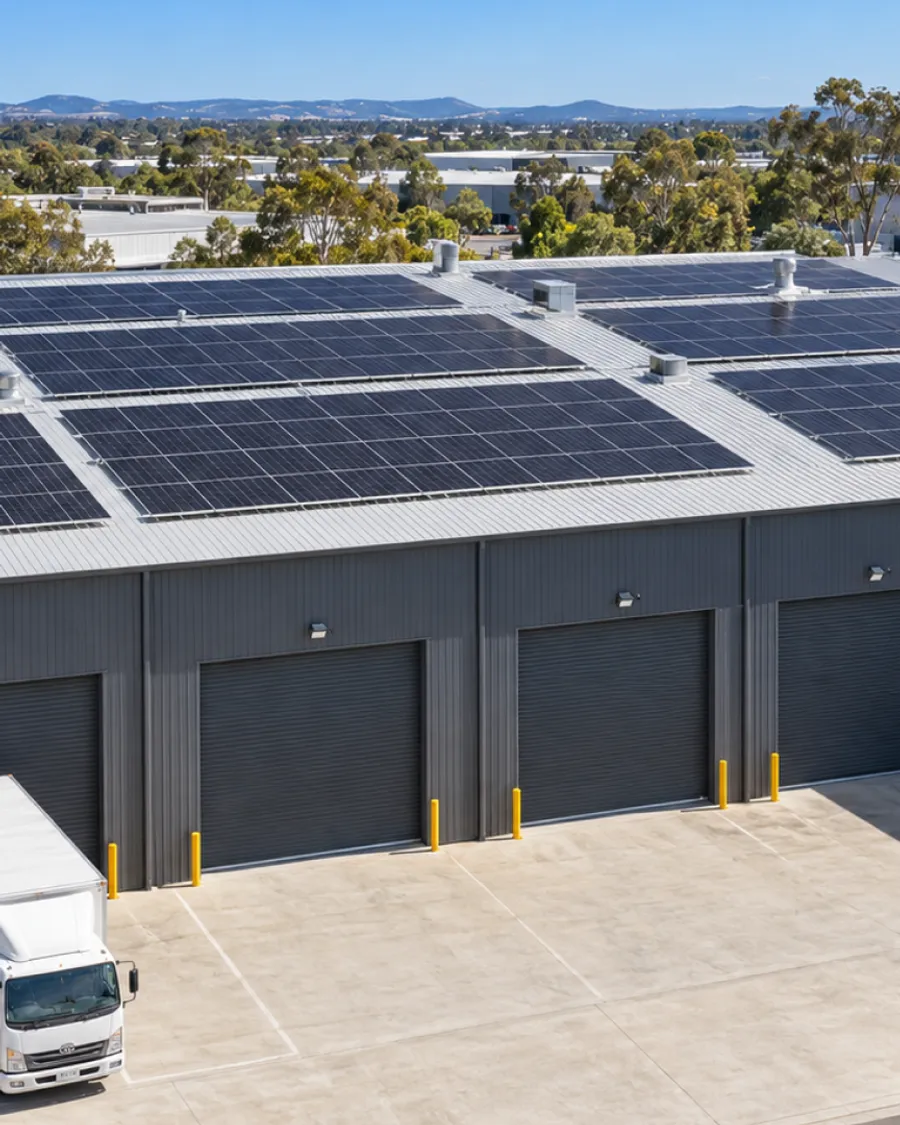
For businesses comparing commercial solar, a 50kW system is the usual step up from a 20kW or 30kW system, and often the largest size a single-site business looks at before moving into a much bigger project. This page explains which businesses it suits, how it compares with smaller and larger options, how to judge payback from your own bills, and what to look for when comparing quotes.
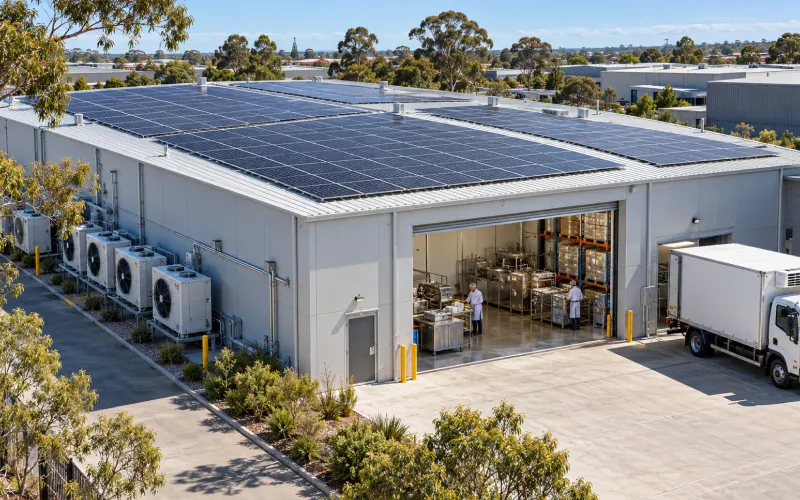
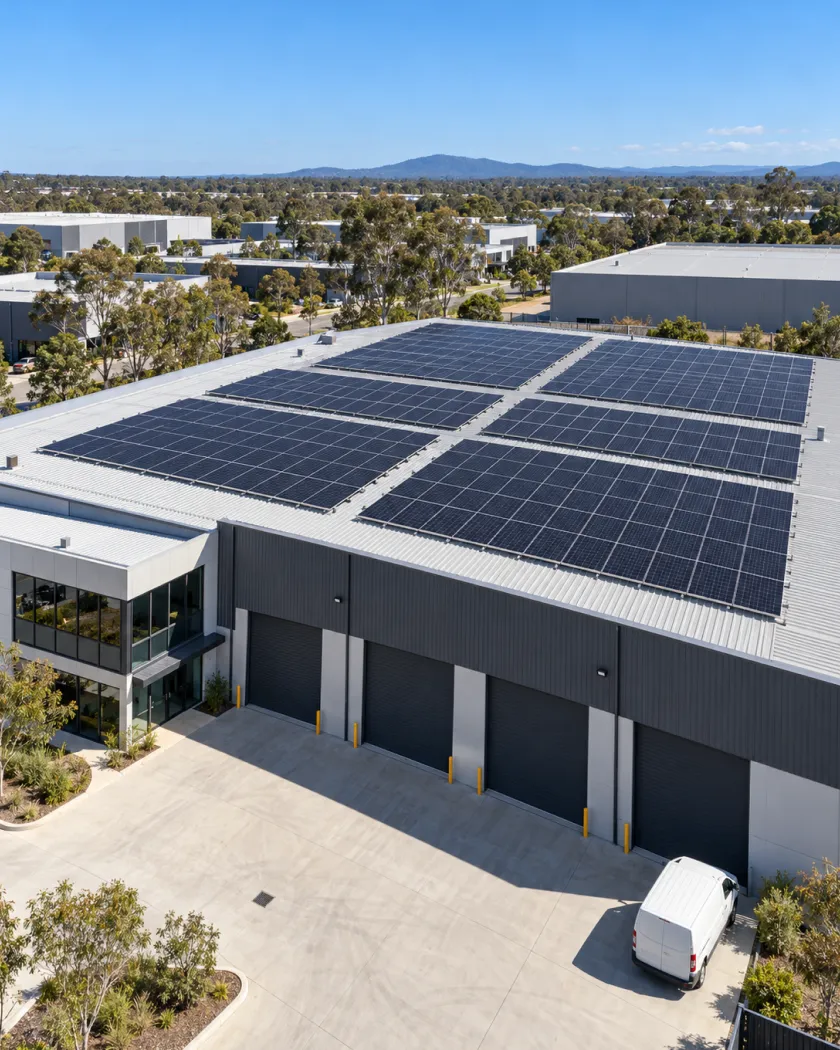
A 50kW solar system makes most sense where power use is heavy and steady through daylight hours. Typical examples are cold storage and refrigeration, food production, workshops and light manufacturing, medical centres, schools, supermarkets, and offices with large air-conditioning plant.
Businesses open six or seven days a week usually get more from this size, because solar generated on a quiet weekend is mostly exported at a lower rate than grid power costs.
The most reliable way to test the fit is your own interval data. It shows when your business draws power through the day. If usage climbs through the morning and stays high into the afternoon, a 50kW array will mostly be used on site.
If usage is light during the day and peaks in the evening, a smaller system with storage may suit you better. Output also varies by location: the Clean Energy Regulator rates sunnier northern and inland areas higher than Melbourne or Hobart, and roof direction and shading matter too.
| System | Usually suits | Worth knowing |
|---|---|---|
| 20kW | Small offices, retail shops, cafes | Standard connection process with most distributors |
| 30kW | Workshops, clinics, mid-size offices | Usually the largest size on the standard connection process |
| 50kW | Warehouses, cold storage, schools, supermarkets | Separate network approval and a three-phase supply |
| Above 100kW | Multi-shift manufacturing, large sites | Can now claim STCs under the expanded scheme |
The main trade-off between sizes is simple. A bigger array usually lowers the cost per kilowatt, but it only pays off if your business can use the extra output. If your load sits between the two, ask for a 30kW and a 50kW solar system to be modelled side by side.
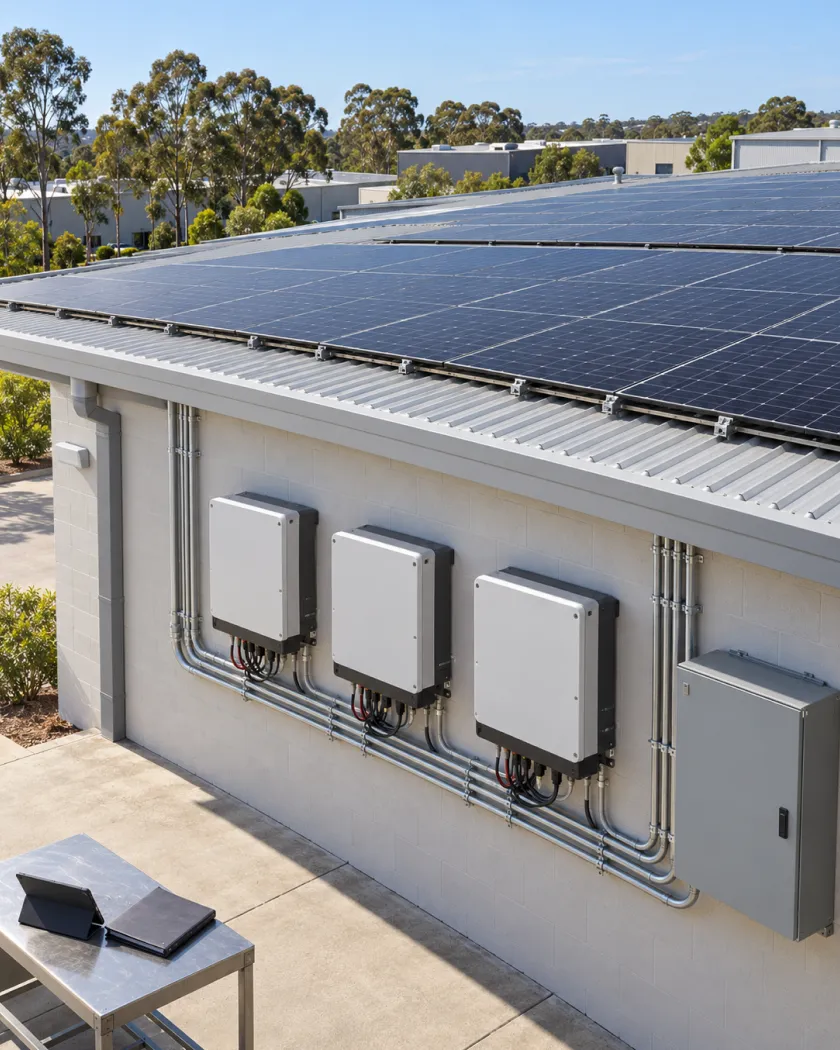
The package covers the panels, inverters, mounting, cabling, protection equipment and monitoring, plus the paperwork for the STC discount and the network application. Our package splits output across three inverters rather than one large unit, so each can be matched to a different roof face, and a fault in one does not shut the whole system down. Mounting suits tin, Klip-Lok and tile roofs.
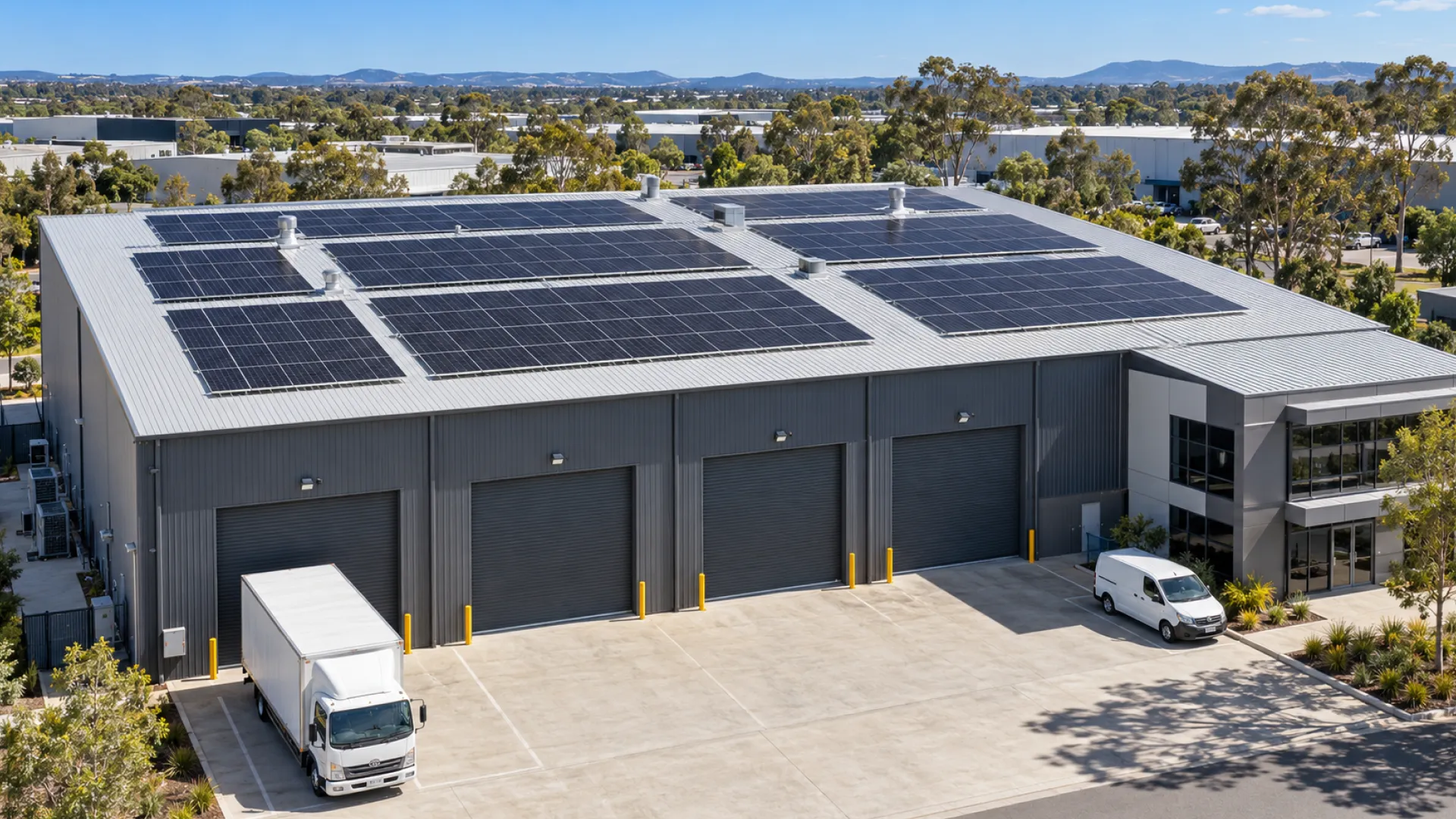
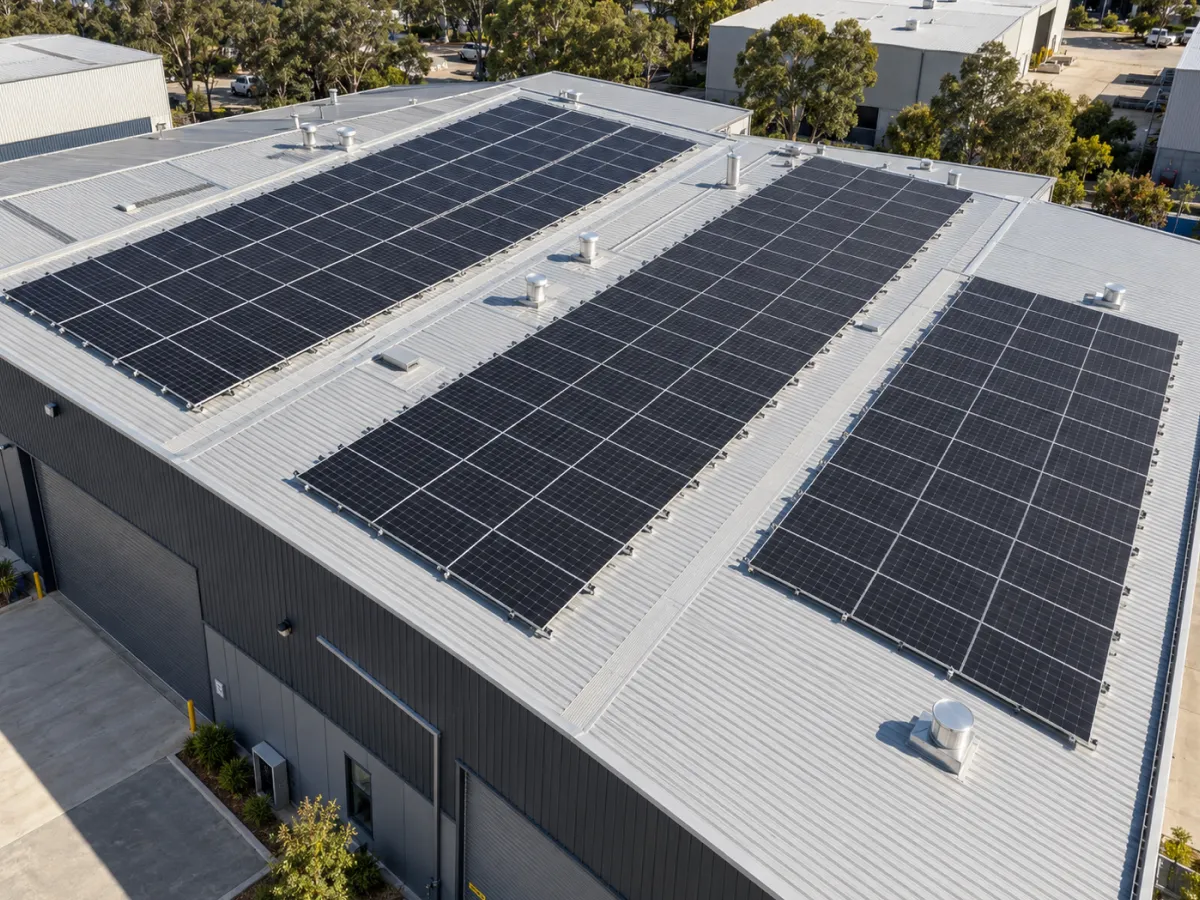
Roof space is the first practical check. A 50kW array covers a large area once walkways and edge setbacks are included, so many sites spread panels across several roof sections. Older roofs, especially those with asbestos cement sheeting, need assessment before anything is fixed to them.
A 50kW system sits under the small-scale limit, so it earns small-scale technology certificates (STCs), which most installers apply as an upfront discount. The number of certificates depends on system size, your location and the year of installation, and it shrinks every January until the scheme ends in 2030.
Installing sooner therefore attracts a larger discount than waiting. Certificate prices also move with the market, so your quote should show both how many STCs are claimed and the price applied to each.
The rest of the price depends on the panel and inverter brands, roof access and safety equipment, switchboard upgrades, any network protection devices and monitoring. Because the system is a business asset, ask your accountant how depreciation applies to your entity.
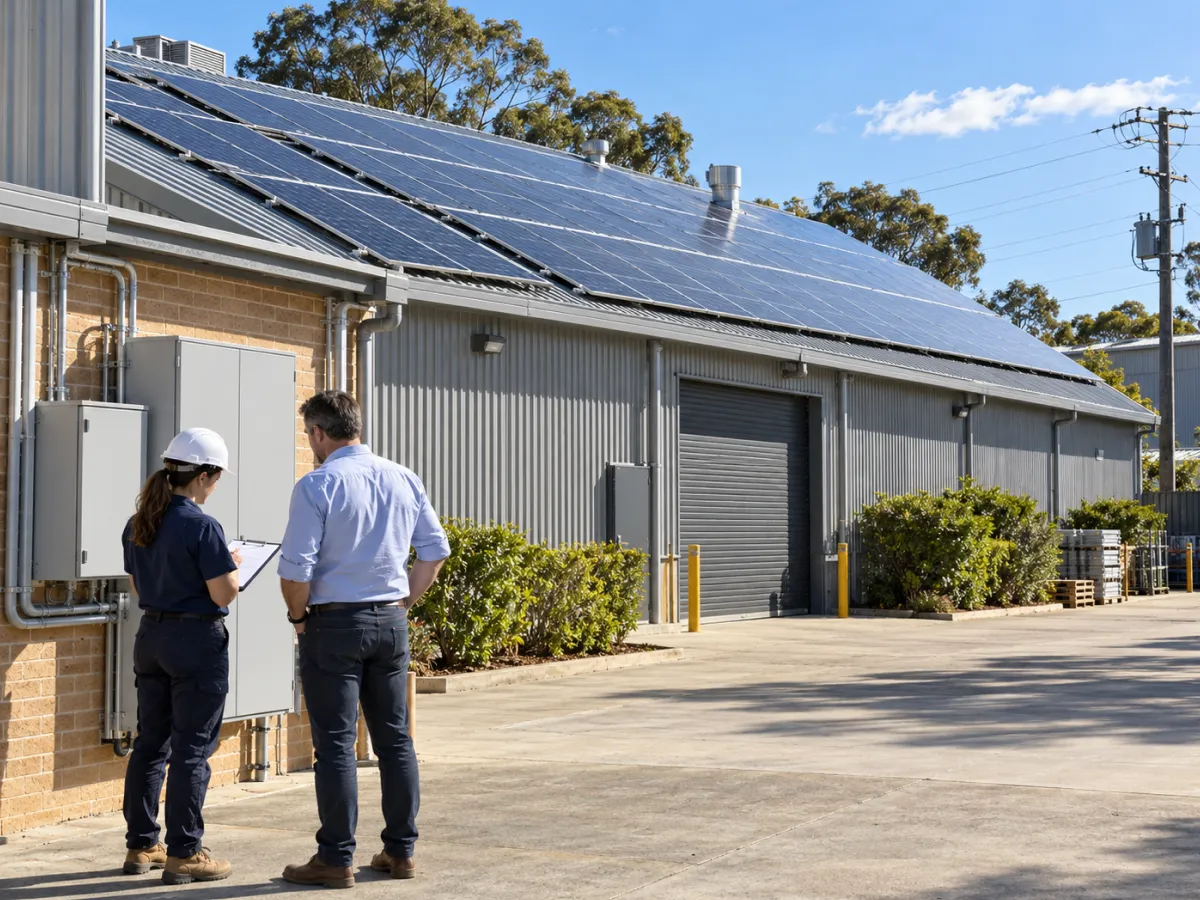
Distributors handle systems above 30kW differently from household solar. In Ausgrid’s network, for example, these systems go through a separate application, some need extra protection equipment, and the NSW Service and Installation Rules require written approval before the system is switched on.
A distributor may also limit how much a system can export, which reduces savings if your business cannot use most of the output. Approval should be in place before any equipment is ordered.
If your business runs into the evening, a battery can move daytime generation into later hours. The federal Cheaper Home Batteries Program covers small businesses as well as homes, but the discount per unit of storage reduces as battery size increases. Size storage to your evening and overnight load rather than to the array. Our hybrid solar system explains how storage connects to solar.
Let’s Be Green is an Approved Seller under the New Energy Tech Consumer Code, which covers residential and small business customers and requires clear quotes, an assessment of whether the system suits your needs, and proper complaints process.
Larger businesses should ask how the Code applies to their contract. When comparing 50kW solar system installation quotes, check that each one lists:
Send your recent electricity bills or interval data and your site address. We will model a 50kW solar system against your actual usage, show how the STC discount and payback are worked out, and tell you if a smaller or larger system would suit you better.