
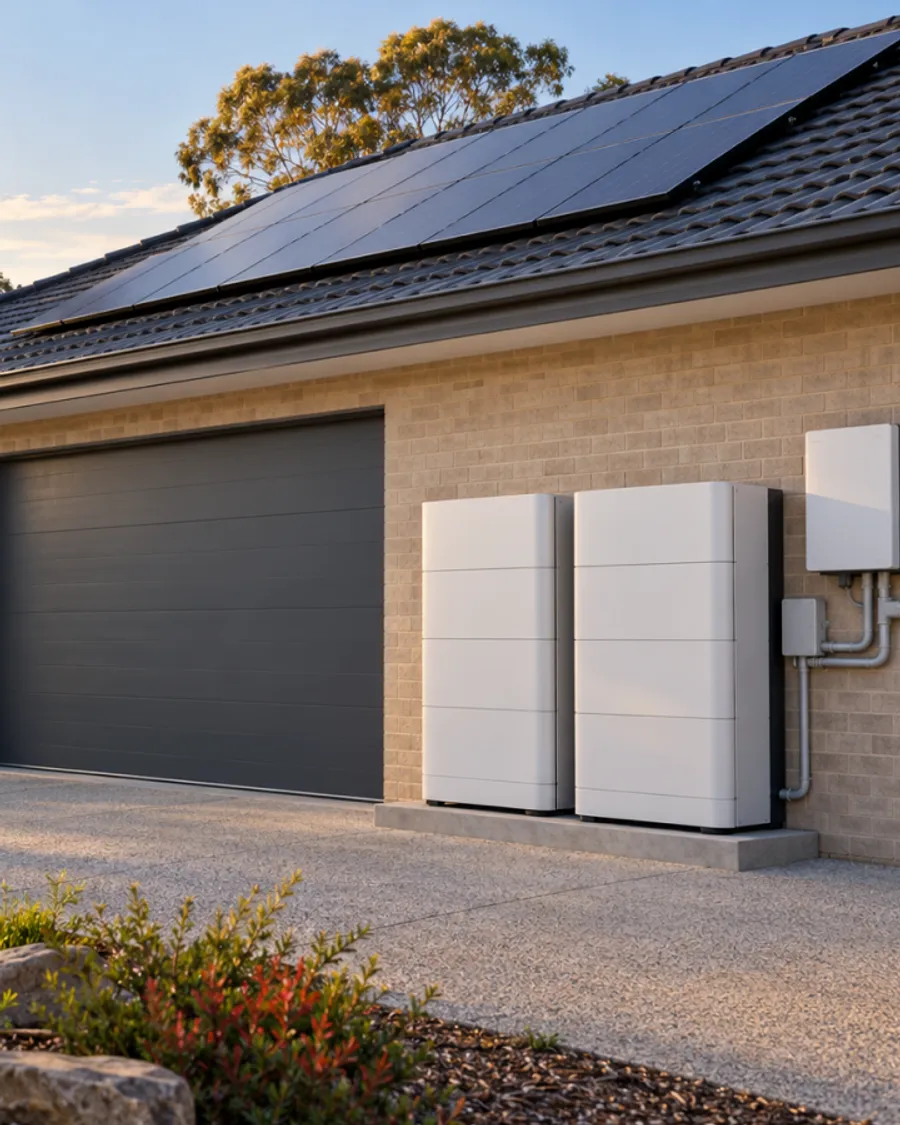
28kWh Solar Battery for Australian Homes
A 28kWh solar battery sits at the larger end of what Australian homeowners install. It costs more than a mid-size unit, so the decision should rest on your usage, your solar array and the rules that decide what you can claim.
This page covers how a 28kWh solar battery system works, which homes it suits, how the federal rebate treats this size and what a compliant quote contains.
What 28kWh actually means

-
The "28kWh" on a product sheet is usually the nominal capacity, the total energy the cells can hold. The figure that matters day to day is usable capacity, which is lower because the battery management system keeps a reserve to protect the cells.
-
The Clean Energy Council (CEC) approved product list shows both numbers for each model, and the rebate is calculated on usable capacity, not nominal.
-
A battery sold as 28kWh may therefore deliver a few kWh less to your home. Ask for the exact model number and check both figures yourself.
-
Capacity is also separate from power. Capacity (kWh) is how much energy is stored. Power (kW) is how fast the inverter can deliver it. A large battery on a small inverter can store plenty yet struggle to run an oven, air conditioner and EV charger together, so check the continuous output rating and whether your home is single-phase or three-phase.
Who a 28kWh residential solar battery suit
Size the battery to what you use after the sun goes down, not to the biggest number available. Pull your last few bills and note average daily consumption and how much of it falls in the evening and overnight. A 28kWh residential solar battery tends to make sense where:
- household use is high, such as a large family home with ducted cooling and electric hot water
- an electric vehicle charges at home, which adds a heavy load that daytime solar often misses
- the home is all-electric, with no gas for heating, cooking or hot water
- you want longer backup during outages and are paying for a backup-capable inverter
If your evening use is modest, a smaller battery fills more often and usually costs less. Our 14kWh solar battery page shows where that size fits.
How the Cheaper Home Batteries Program treats 28kWh
The federal Cheaper Home Batteries Program gives an upfront discount through small-scale technology certificates (STCs), aiming at roughly 30% off the cost of an eligible battery. Since 1 May 2026 the Clean Energy Regulator applies the STC factor in tiers of usable capacity: 100% for the first 14kWh, 60% for capacity above 14kWh up to 28kWh, and 15% for capacity above 28kWh up to 50kWh.
For this size, that matters. A battery with 28kWh usable sits at the top of the 60% band, so none of its capacity earns the 15% rate. A unit with 29kWh usable gains only a small extra amount of support for that final kWh. When you compare a 28kWh unit with a slightly larger one, compare the final price after the discount, not capacity alone.
The STC factor also steps down every six months, so the dollar value moves over time. We have not printed a rebate figure here because it would date quickly. Ask for the STC count and its dollar value in writing on your quote.
To qualify, the battery and inverter must be on the CEC approved lists, and an on-grid system must be capable of joining a virtual power plant (you do not have to join one).
Installation must be done or supervised on site by an installer accredited by Solar Accreditation Australia with a battery endorsement. The battery also connects to a solar system, new or existing.
Matching the battery to your solar system
A 28kWh solar battery needs surplus solar to fill it. Whatever your panels generate beyond daytime use goes into storage, so a small array on a high-use home may leave the battery partly empty most days. Larger packages such as our 10kW solar system or 13kW solar system leave more surplus to work with, while a 6.6kW solar system usually pairs better with a smaller battery.
If you are planning solar and storage together, read about a hybrid solar system, or start with the residential solar overview. Our guide to choosing a 6.6kW, 10kW or 13kW system explains how array size relates to household use.
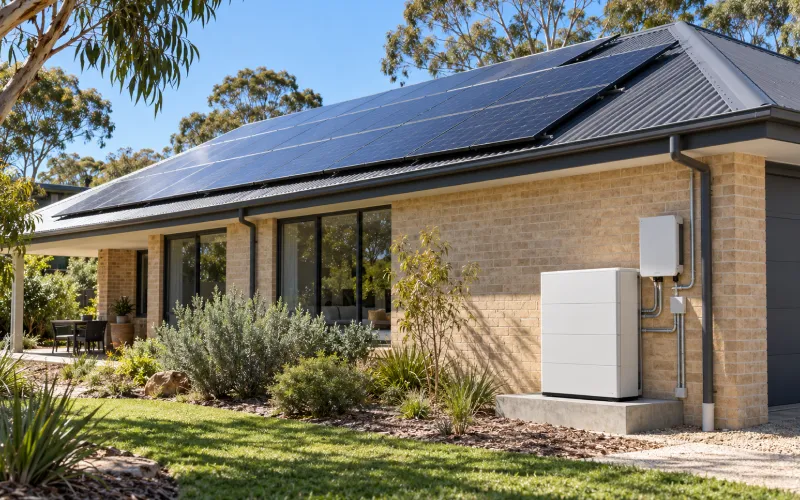
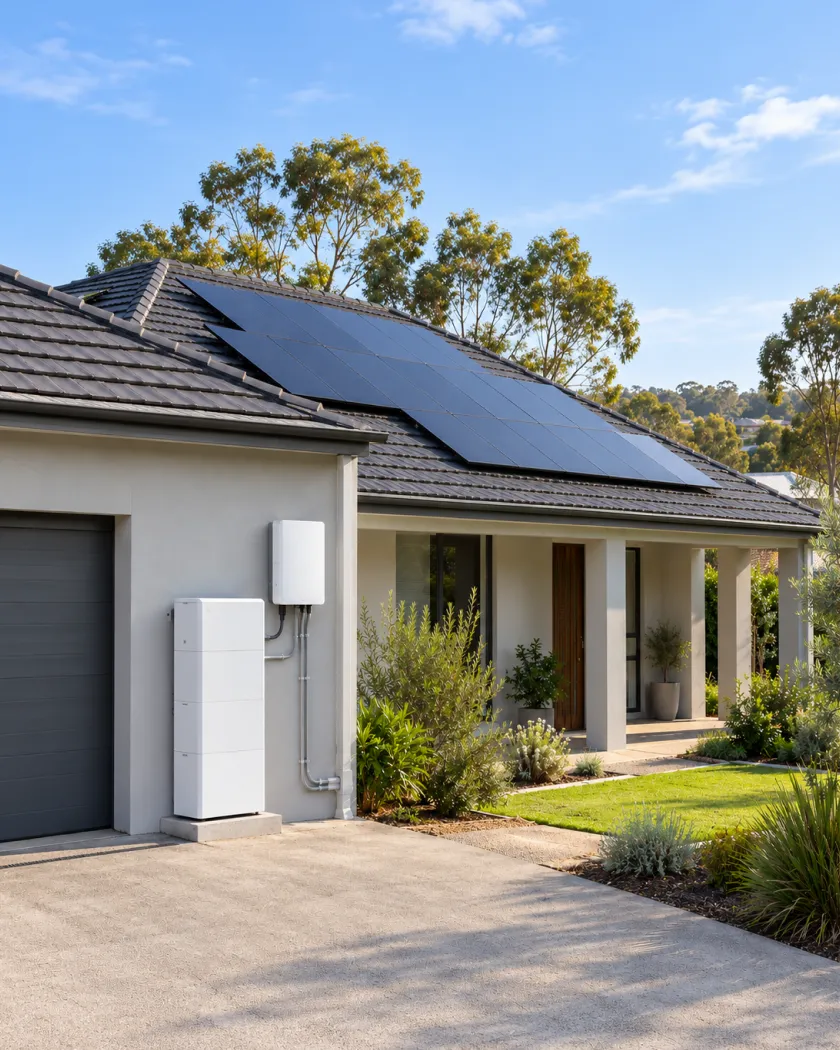
Where a 28kWh battery can be installed?
They cannot be installed in habitable rooms such as bedrooms and living areas. A garage, an external wall or a purpose-built enclosure is the usual choice.
Where the battery sits on a combustible wall shared with a habitable room, a non-combustible barrier is required, and clearance zones apply around doors, windows and vents.
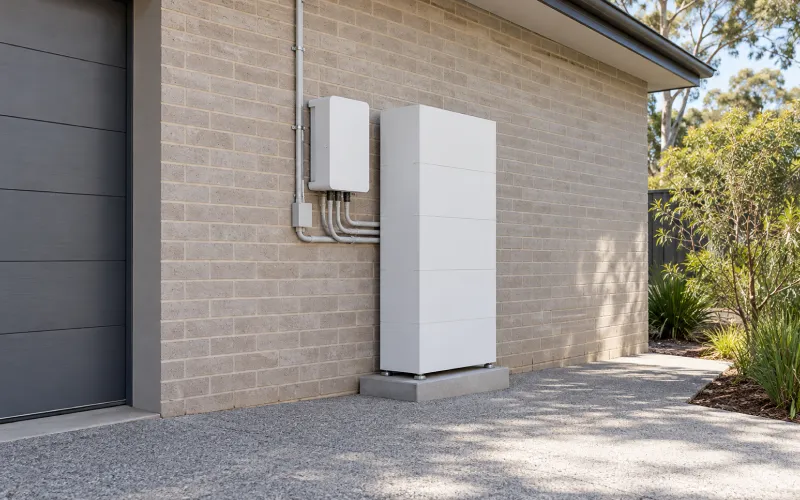
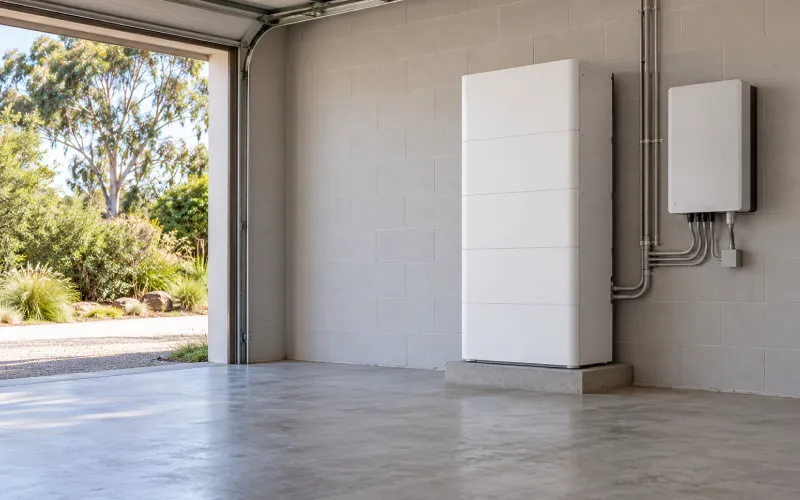
Large units are heavy, so a site inspection before quoting should confirm the wall, weather protection and servicing space.
Reading a 28kWh solar battery price and quote
Pricing varies with brand, inverter, phase, backup circuits and installation complexity, so a single number would mislead. What you can control is how clearly the quote sets it out.
Let's Be Green is a NETCC approved seller, and the New Energy Tech Consumer Code sets out what customers should receive. A code-compliant quote is itemised, specific to your site, and states expected performance and any limitations.
Contracts must show cooling-off rights where they apply under Australian Consumer Law, and sales should be free of high-pressure tactics.
When comparing a 28kWh solar battery price between suppliers, check that the quote lists:
- the model number, with nominal and usable kWh
- continuous and peak power output
- the STC discount as a separate line, with the STC factor used
- whether the inverter and backup circuits are included
- warranty length, terms and the capacity retained at the end of it
- installation, switchboard and metering work
- a site design and performance estimate